A life in context
The person behind the prize
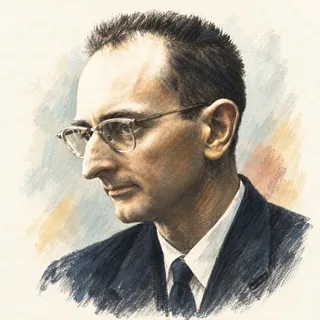
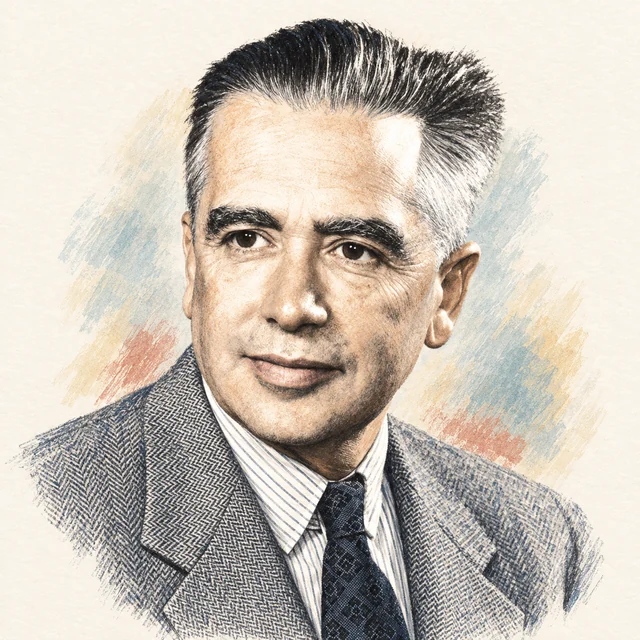
Segrè began engineering studies in Rome in 1922, changed to physics in 1927 and completed his doctorate under Fermi in 1928. Work in spectroscopy and with Fermi’s neutron group preceded his appointment at Palermo in 1936. He came to Berkeley in 1938, worked at Los Alamos during the war and returned to Berkeley as professor in 1946. His earlier contributions included work on technetium, astatine and plutonium, distinct from the 1959 award. With Chamberlain, Clyde Wiegand and Thomas Ypsilantis, he identified the antiproton in 1955 using the Bevatron and methods that combined momentum and velocity measurements. Related photographic-emulsion work helped confirm its annihilation behaviour. The prize was shared equally by Segrè and Chamberlain, within a larger experimental effort. His autobiography distinguishes his actual January birth date from the later registered February date; the archive gives the birth year without choosing between them.
The contribution
Segrè and the Berkeley team developed and interpreted the experimental evidence for the antiproton. Segrè received half of the Physics Prize.
The idea in plain language
The positron had confirmed that antiparticles could exist, but an antiproton required a much more energetic experiment. Producing a candidate was only part of the problem: many other negatively charged particles could imitate one aspect of its behaviour.
Read the full award story ↗