A life in context
The person behind the prize
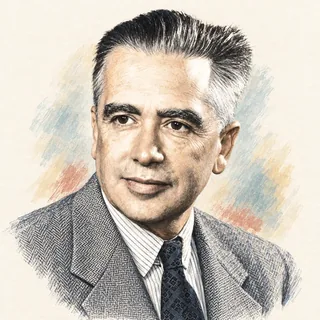
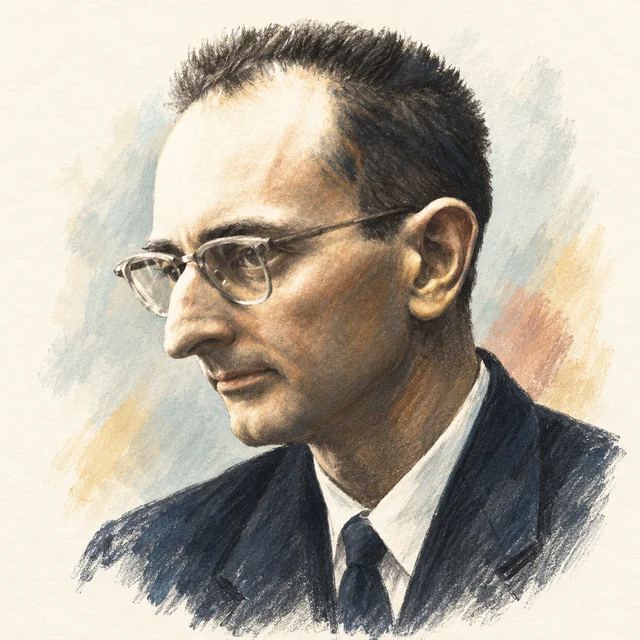
Chamberlain graduated from Dartmouth in 1941 and began graduate study at Berkeley before wartime work interrupted it. He worked with Segrè on the Manhattan Project, then resumed graduate research with Fermi at Chicago in 1946. His experimental work was completed in 1948 and his doctorate awarded in 1949; he had already begun teaching at Berkeley in 1948. Studies of scattering and polarisation preceded the antiproton work. In 1955 Chamberlain, Segrè, Wiegand and Ypsilantis combined magnetic momentum selection with independent speed measurements to distinguish antiprotons from other negatively charged particles. Scintillation and Cherenkov detection supplied complementary evidence. He became Berkeley professor in 1958 and received half of the 1959 prize. Polarised-target research beginning in 1960 and later detector work belong to subsequent history, even though they appear in his updated Nobel biography.
The contribution
Chamberlain helped design the particle-identification methods and experiments establishing the antiproton, with Segrè and their collaborators. He received half of the Physics Prize.
The idea in plain language
The positron had confirmed that antiparticles could exist, but an antiproton required a much more energetic experiment. Producing a candidate was only part of the problem: many other negatively charged particles could imitate one aspect of its behaviour.
Read the full award story ↗