A life in context
The person behind the prize
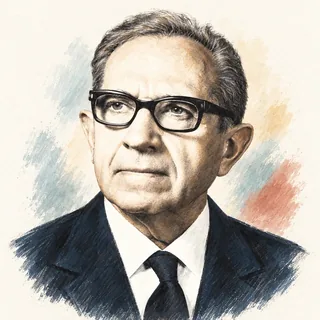
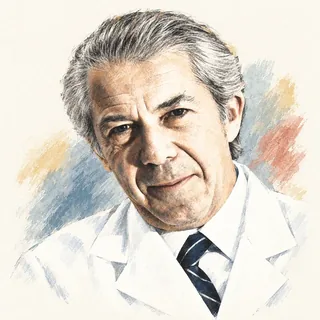
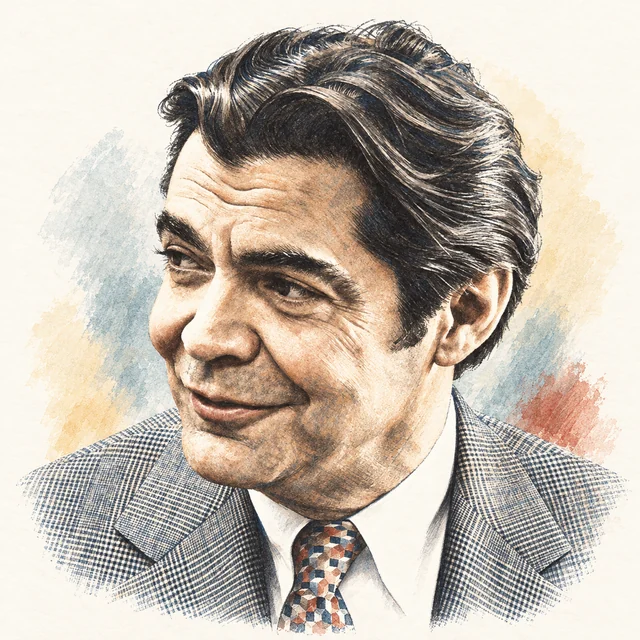
Palade grew up in Romania in a family that valued education. He entered Bucharest medical school in 1930 and graduated in 1940, with an interest in microscopic anatomy. After wartime medical service, he moved to the United States in 1946 and joined Albert Claude at Rockefeller that autumn. With Keith Porter and other colleagues, he improved preparations for electron microscopy and explored the newly visible structures inside cells. He described the particles later called ribosomes. Work with Philip Siekevitz combined microscopy and biochemical fractionation, identifying microsomes as fragments of the endoplasmic reticulum. Studies with Lucien Caro and James Jamieson followed proteins through the secretory pathway. Palade moved to Yale in 1973 to connect the growing field of cell biology with medical research. His discoveries joined detailed structure to dynamic cellular processes.
The contribution
Palade characterised cellular ultrastructure, including ribosomes, and traced the synthesis and intracellular transport of proteins destined for secretion. He received one third of the Medicine Prize.
The idea in plain language
Claude developed cell fractionation: cells are disrupted and their components separated through centrifugation, producing fractions that can be examined chemically. Sedimentation depends on size, density and shape, so a fraction is not automatically one pure organelle. Electron microscopy provided detailed structural information. Comparing the chemistry of fractions with their microscopic appearance helped connect components with particular cellular activities.
Read the full award story ↗