A life in context
The person behind the prize
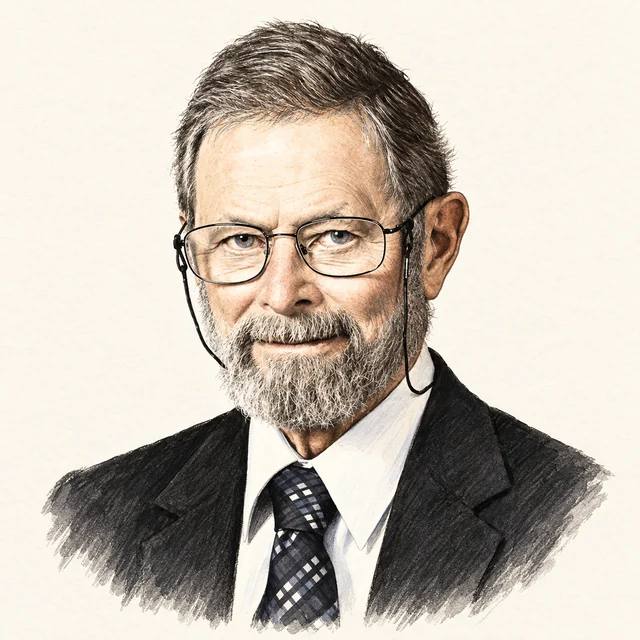
Smith earned his physics doctorate at the University of Chicago in 1959 and joined Bell Laboratories that year. His career focused on electronic devices and semiconductor technology. In a 1969 discussion with Willard Boyle about new memory concepts, he helped sketch the principles of the CCD. He retired from Bell Labs in 1986 after a career that combined basic device ideas with practical inventions.
The contribution
Smith shared the invention of a device that could transfer charge through an array in a controlled sequence. In a CCD image sensor, the amount of charge at each position records light intensity, and the ordered readout preserves the spatial pattern. Other researchers and engineers helped develop this principle into working cameras and sensitive instruments; a CCD is one sensor technology, not a synonym for every digital camera.
The idea in plain language
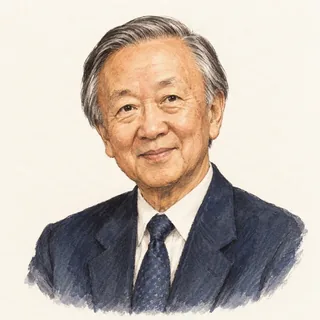
A glass fibre can guide light, but early fibres lost too much of it to carry useful signals over long distances. Kao, working with George Hockham, showed that much of the obstacle came from impurities in the glass. His analysis pointed toward exceptionally pure material and helped turn optical communication into a practical research target. Making low-loss fibres, lasers, amplifiers and complete networks required many further contributors.
Read the full award story ↗