A life in context
The person behind the prize
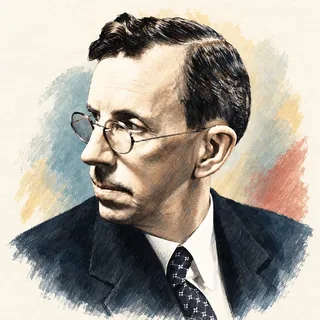
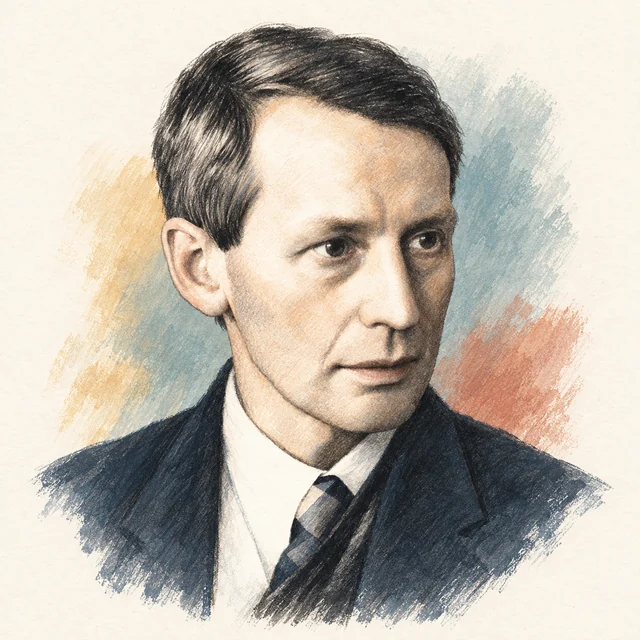
Thomson studied mathematics and physics at Cambridge and began research with his father, J. J. Thomson. During the First World War he worked on aerodynamics; afterwards he returned to Cambridge before becoming professor at Aberdeen. There he and Alexander Reid investigated electrons transmitted through very thin films. Their 1927 report described rings on a photographic plate, and subsequent experiments with metal films tested their relation to crystal structure and electron momentum. This was an independent route to evidence for electron waves, different from Davisson and Germer’s nickel-scattering work. In 1930 Thomson became professor at Imperial College in the University of London, his affiliation at the 1937 award. He received half the Physics Prize. Later nuclear research and wartime scientific advisory work belonged to a different phase of his career. He became master of Corpus Christi College, Cambridge, in 1952.
The contribution
Thomson received half the Physics Prize for electron diffraction by crystals. His thin-film transmission research, including work with Reid at Aberdeen, established wave-like diffraction independently of Davisson’s scattering experiments.
The idea in plain language
An electron leaves localised traces, yet its behaviour cannot always be explained as a tiny classical projectile. De Broglie proposed a relation between a particle’s momentum and an associated wavelength. Crystals, with their regular atomic arrangement, offered a test: a beam with wave properties could produce preferred directions and interference rather than a featureless spread.
Read the full award story ↗