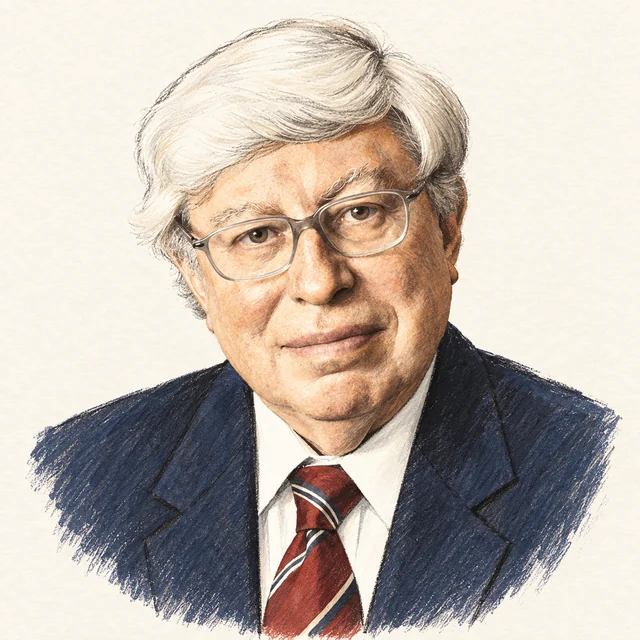
A life in context
The person behind the prize
Ertl received his doctorate in physical chemistry at the Technical University of Munich in 1965. He became a central figure in surface chemistry and was affiliated with the Fritz Haber Institute in Berlin at the time of the prize. His work combined carefully prepared surfaces, controlled gases and several kinds of measurement, treating cleanliness and independent checks as essential parts of the experiment.
The contribution
Ertl established methods for working out the individual steps of reactions on solid surfaces. His studies explained how nitrogen and hydrogen form ammonia on iron, and explored carbon monoxide oxidation on platinum, including complicated changes in reaction patterns over time. He did not invent the Haber–Bosch process; he helped reveal how its catalytic surface works at the atomic scale.
The idea in plain language
A solid catalyst can help reacting molecules meet, attach, split and rearrange before the products leave. The important action may occupy only the outermost atomic layers, making it hard to distinguish a genuine reaction intermediate from contamination. Ertl combined very clean surfaces, controlled exposure to gases, spectroscopy and other measurements to establish what was present and how the reaction proceeded.
Read the full award story ↗

