A life in context
The person behind the prize
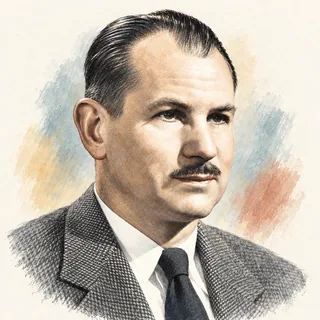
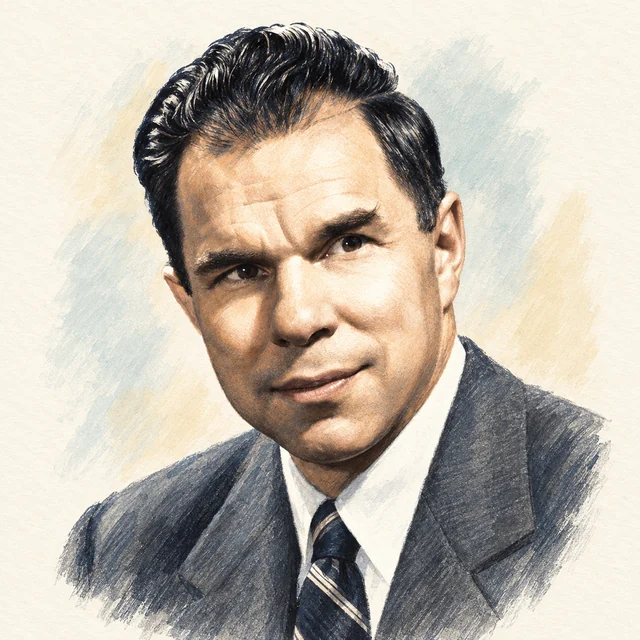
Seaborg began university study at UCLA in 1929 and completed his chemistry doctorate at Berkeley in 1937. He worked with Gilbert N. Lewis before joining the teaching staff and researching radioactive isotopes. Building on McMillan’s investigations, Seaborg, Joseph Kennedy and Arthur Wahl carried forward the work that chemically identified plutonium in February 1941; McMillan shared in the discovery credit. Seaborg worked at Chicago’s wartime Metallurgical Laboratory from 1942 to 1946, and formulated the actinide concept in 1944 to explain relationships among heavy elements. He became a Berkeley professor in 1945 and returned to nuclear-chemistry research there after the war. Berkeley was his affiliation for his half of the 1951 prize. His chancellorship in 1958 and chairmanship of the US Atomic Energy Commission in 1961 were later appointments. Discoveries extending further across the heavy elements span a longer career than the work already completed in 1951.
The contribution
Seaborg and collaborators identified plutonium and other transuranium elements; his actinide concept helped explain their chemical relationships. He received one half of the prize.
The idea in plain language
An element is defined by the number of protons in its nucleus. Uranium has 92; identifying something beyond it requires evidence for a different chemical element, not just a heavier isotope of uranium. In 1940 McMillan and Philip Abelson identified neptunium, atomic number 93. Chemical behaviour and radioactive evidence helped distinguish it from known material.
Read the full award story ↗