A life in context
The person behind the prize
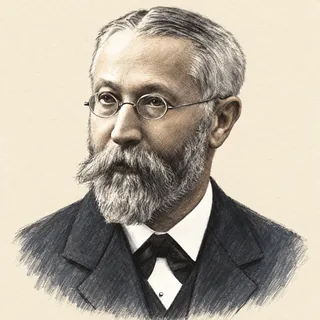
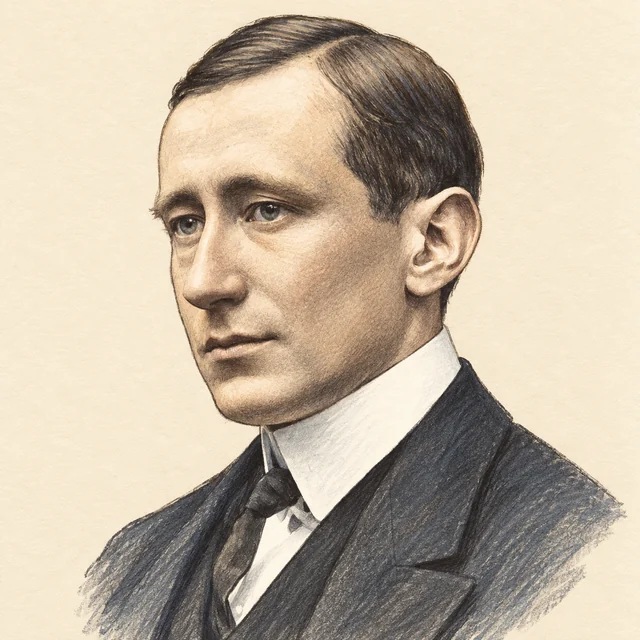
Guglielmo Marconi was privately educated in Italy and became interested in the work of Maxwell, Hertz, Righi and other investigators of electromagnetic waves. Experiments at his family’s estate near Bologna in 1895 led to wireless signalling over distances beyond a laboratory room. In 1896 he took his equipment to England, where the Post Office engineer William Preece supported demonstrations. A company followed in 1897. Marconi combined transmitters, receivers, aerials, operators and shore stations into a practical commercial system, with English Channel signalling in 1899 and further work on tuning. In 1901 he reported receiving a signal from Cornwall in Newfoundland; sustained commercial transatlantic service followed in 1907. These were different stages of development, not one demonstration proving reliable communication under every condition. He shared the 1909 Physics Prize equally with Ferdinand Braun for contributions to wireless telegraphy. Later work included directional short-wave links and microwaves. His public career also involved military service and politics: he joined Italy’s Fascist Party in 1923. That history is separate from the scientific award. He died in Rome in 1937. The development of radio involved many researchers, engineers and competing companies; the prize did not make him the sole discoverer of electromagnetic waves.
The contribution
Marconi received half the Physics Prize for developing practical wireless telegraphy. Demonstrations, system engineering and commercial networks helped turn electromagnetic-wave experiments into long-distance signalling.
The idea in plain language
Hertz’s experiments had shown that electromagnetic waves could travel through space. A useful communication system still required ways to generate, radiate, detect and distinguish signals over much greater distances. Marconi assembled and improved equipment, conducted demonstrations and built commercial services linking shore stations and ships. Telegraph messages were encoded in timed signals, rather than transmitted as ordinary speech.
Read the full award story ↗