A life in context
The person behind the prize
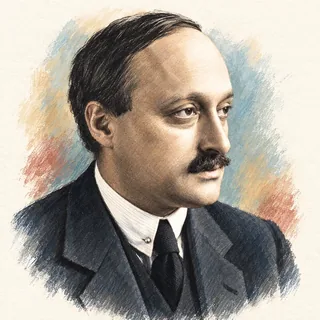
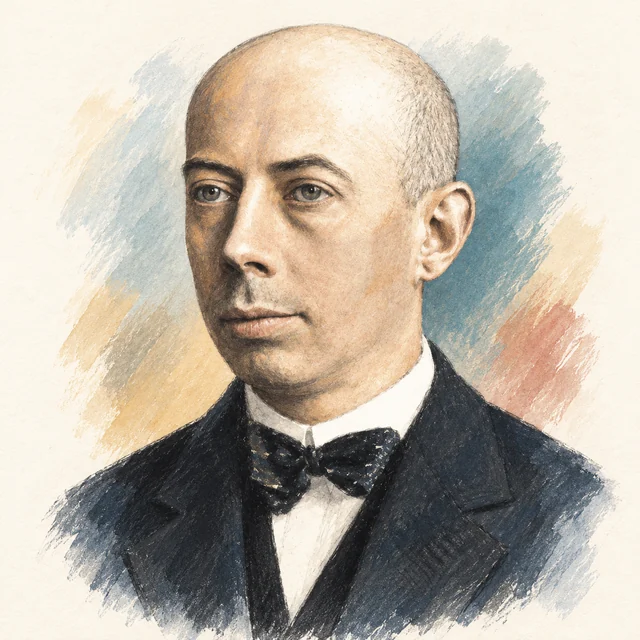
Hertz was born in Hamburg and studied at Göttingen, Munich and Berlin, completing his university training in 1911. He became a research assistant in Berlin in 1913 and began studying electron impacts with James Franck. Their work connected measurable losses of electron energy with the excitation of atoms, providing a test of the discrete energy states central to quantum theory. His career was interrupted by the First World War, in which he was severely wounded. After returning to research he worked at Philips in Eindhoven from 1920 to 1925, then became professor and director of the physics institute at Halle. He held that position when awarded half the 1925 Physics Prize in 1926. He moved to Berlin’s technical university in 1928 and later worked on isotope separation. Political conditions led him to leave his university post for industry in 1935. After work in the Soviet Union from 1945 to 1954, he returned to an academic position in Leipzig. He died in 1975. Gustav Hertz should not be confused with Heinrich Hertz, known for earlier work on electromagnetic waves.
The contribution
Hertz shared the Physics Prize equally with Franck for laws governing electron–atom collisions. Their measurements linked electron energy loss with the allowed excitation energies of atoms.
The idea in plain language
Could an atom accept any small amount of energy, or only particular amounts? Franck and Hertz investigated by sending electrons through a gas and varying the energy supplied to them. The measured electrical current showed changes that could be connected with electrons losing energy in collisions with atoms.
Read the full award story ↗