A life in context
The person behind the prize
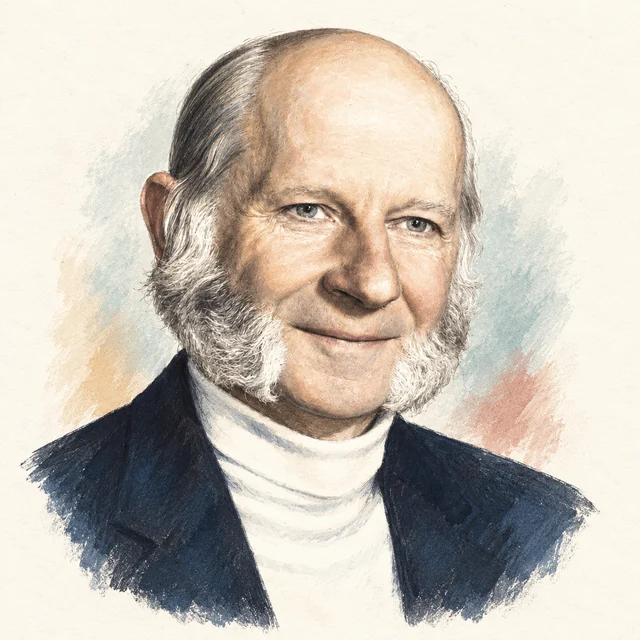
Dehmelt developed an early interest in radio equipment. Military service and captivity interrupted his studies during the Second World War. After release he resumed physics at Göttingen, then worked at Duke and in Seattle. He developed experiments that held charged particles for long observation. With David Wineland and Phil Ekstrom, he isolated a single electron in 1973. Later work with Robert Van Dyck, Paul Schwinberg and other colleagues measured electron and positron properties with exceptional precision.
The contribution
Dehmelt developed methods using traps, especially the combination of static electric and magnetic fields in a Penning trap, to confine charged particles. Keeping a single electron under controlled conditions allowed precise measurements of its motion and magnetic moment. These measurements tested quantum electrodynamics. Cooling and careful control mattered as much as holding the particle. He received one quarter of the prize, sharing the trap-development half with Paul.
The idea in plain language
An atomic transition provides a reproducible frequency to compare with an applied signal, but motion, collisions and imperfect fields complicate measurement. Ramsey’s method uses two coherent interactions separated by free evolution. The phase accumulated between them affects the outcome of the second interaction, producing a sensitive frequency comparison. This became a foundation of atomic clocks and precision spectroscopy.
Read the full award story ↗