A life in context
The person behind the prize
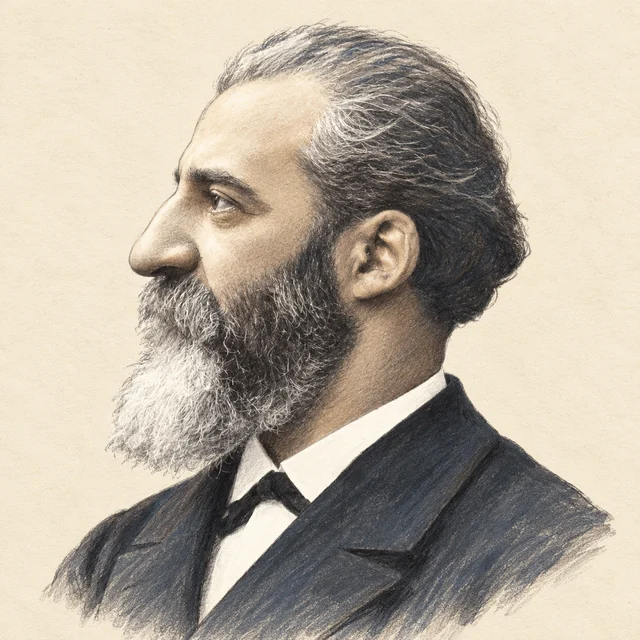
Henri Moissan grew up in France and turned from pharmacy towards experimental chemistry. Work in laboratories associated with the Paris Museum of Natural History and the École Pratique des Hautes Études gave him opportunities to study chemical reactions. He completed a doctorate in 1880 and developed a research programme on fluorine compounds. Chemists knew many compounds containing fluorine, but isolating the highly reactive element had proved difficult and dangerous. In 1886 Moissan succeeded in obtaining elemental fluorine using specially designed electrochemical apparatus. Fluorine is the element; fluoride is the name used for its negatively charged ion and for compounds containing it. The isolation opened a systematic study of its reactions rather than ending the problems of handling it. Another strand of Moissan’s work used an electric arc furnace, developed in 1892, to explore reactions at temperatures ordinary chemical furnaces could not readily reach. He investigated refractory materials, metals and carbides, extending the range of substances chemists could prepare and examine. He became professor of inorganic chemistry at the Sorbonne in 1900. The full 1906 Chemistry Prize explicitly joined these two achievements: the investigation and isolation of fluorine and the electric furnace named after him. Some contemporary accounts also celebrated his attempts to make diamonds. Those results could not be reliably reproduced and should not be presented as an established successful synthesis; later historical analysis associated the supposed products with silicon carbide. His confirmed contributions do not require that disputed claim. Moissan continued to teach and carry out experiments until his death in Paris in 1907, shortly after the prize. His career shows how developing an apparatus can make a previously inaccessible chemical question experimentally approachable. It also shows why a striking reported result needs independent identification and replication.
The contribution
Moissan received the full Chemistry Prize for investigating and isolating fluorine and for introducing the electric furnace used in high-temperature chemical research.
The idea in plain language
Fluorine reacts so readily that obtaining the free element from its compounds had defeated earlier attempts. In 1886 Moissan used specially developed electrochemical apparatus to isolate it. The achievement made its properties and reactions available for more systematic investigation.
Read the full award story ↗

