c.curionodeThe Nobel Archive

1906 · Chemistry

Make difficult chemistry experimentally accessible

Moissan’s prize joined two achievements: isolating elemental fluorine and developing an electric furnace that opened new possibilities for high-temperature chemical research.

FluorineElectric furnaceExperimental chemistry
1906Chemistry

Visual guide

The prize, pictured

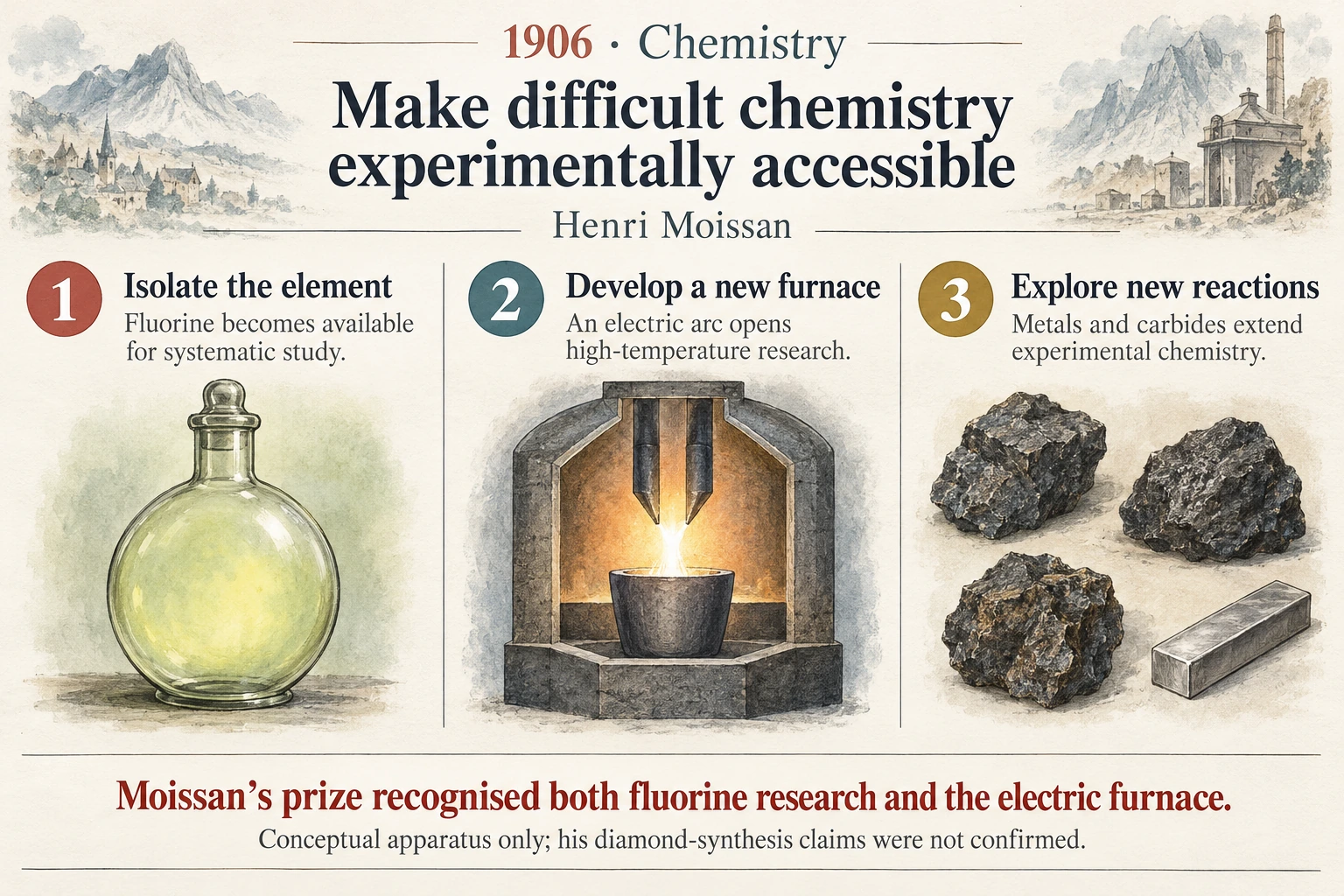
Infographic explaining Make difficult chemistry experimentally accessible
Original AI-generated infographic. A conceptual overview; the explanations and sources below provide context.
Read the poster text

Moissan’s prize recognised both fluorine research and the electric furnace.

  1. Isolate the element

    Fluorine becomes available for systematic study.

  2. Develop a new furnace

    An electric arc opens high-temperature research.

  3. Explore new reactions

    Metals and carbides extend experimental chemistry.

Conceptual apparatus only; his diamond-synthesis claims were not confirmed.

01 · The discovery

The idea, in everyday language

Fluorine reacts so readily that obtaining the free element from its compounds had defeated earlier attempts. In 1886 Moissan used specially developed electrochemical apparatus to isolate it. The achievement made its properties and reactions available for more systematic investigation.

His electric arc furnace, developed in 1892, provided another way to reach difficult reactions. It supported research on refractory materials, metals and carbides. Both the fluorine work and the furnace were explicit reasons for the full 1906 Chemistry Prize.

Why it matters

The work expanded experimental inorganic chemistry by bringing a highly reactive element and very high-temperature reactions within sustained laboratory study. Apparatus design became a route to new substances and new questions.
02 · The people

Who brought the idea to life?

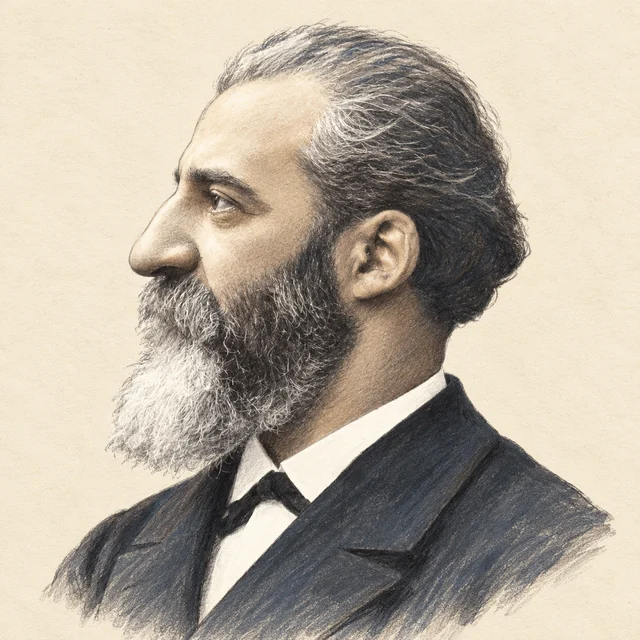
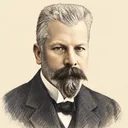
Illustrated portrait of Henri Moissan

Henri Moissan

Prize share · 1

Moissan received the full Chemistry Prize for investigating and isolating fluorine and for introducing the electric furnace used in high-temperature chemical research.

Read the biography ↗

03 · Years in the making

The path here

  1. 1880

    Moissan completes his doctorate.

  2. 1883–1884

    He concentrates research on fluorine compounds.

  3. 1886

    He isolates elemental fluorine.

  4. 1892

    He develops an electric arc furnace.

  5. 1900

    He becomes professor of inorganic chemistry at the Sorbonne.

  6. 1906

    The Chemistry Prize recognises fluorine research and the electric furnace.

  7. 1907

    Moissan dies in Paris.

04 · Read further

From the original sources

Original explanations by Curionode, based on the official records below. Biographical details and affiliations refer to the award year.

  1. Official award summary nobelprize.org
  2. Award ceremony speech nobelprize.org
  3. Académie des sciences: Henri Moissan’s life and experimental work comptes-rendus.academie-sciences.fr
  4. American Chemical Society: the contested diamond experiments pubsapp.acs.org

More in Chemistry

Browse this subject ↗