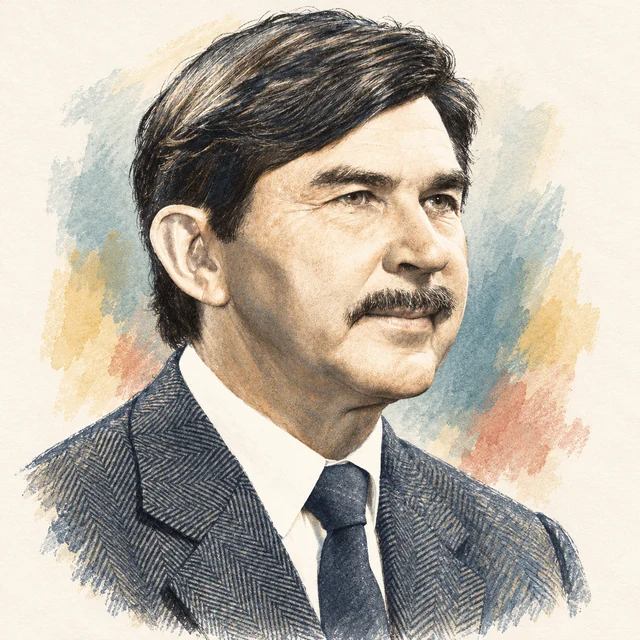
A life in context
The person behind the prize
Raised in Saskatchewan, Taube earned a bachelor’s degree in 1935 and a master’s in 1937 at its provincial university, working with John Spinks. His Berkeley doctorate with W. C. Bray followed in 1940. He taught at Cornell from 1941 and Chicago from 1946, then joined Stanford in 1962. Careful studies of reaction rates and ligand exchange helped him ask how electrons move between metal complexes. His group’s bridge experiments and later work with Carol Creutz on mixed-valence compounds linked molecular structure to reactivity. He served twice as Stanford chemistry chair. His honorary doctorates were separate from his earned Berkeley degree.
The contribution
Taube explained mechanisms of electron transfer, especially in metal complexes. A shared ligand can connect two metal centres during inner-sphere transfer; changes in ligand attachment and metal oxidation states provide evidence for that route. He also investigated transfer without a shared bridge and electronic interactions in mixed-valence compounds. The Chemistry Prize recognised this mechanistic programme, not a claim that all electron transfer requires a bridge.
The idea in plain language
A metal complex contains a metal centre and surrounding ligands. Two complexes can exchange an electron, but the same overall change need not imply the same mechanism. Taube connected ligand-exchange behaviour, rates and reaction products to evidence about the path. A complex that exchanges ligands slowly is kinetically inert; this does not mean exchange is impossible or that every reaction is slow.
Read the full award story ↗

