A life in context
The person behind the prize
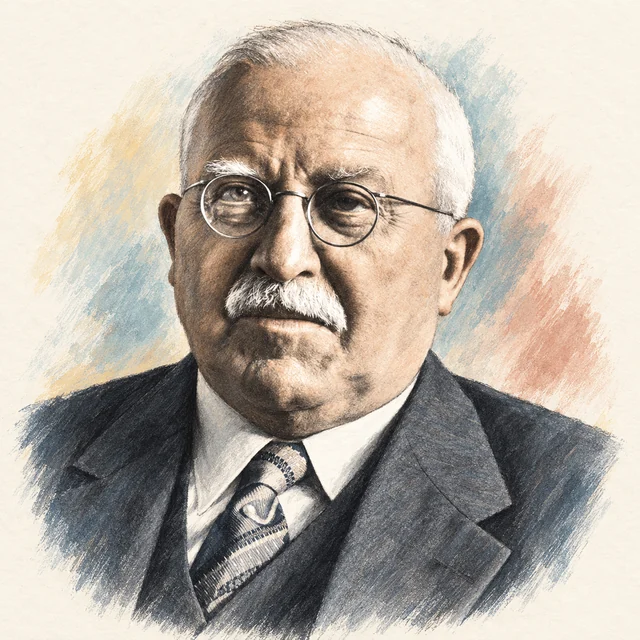
Staudinger studied chemistry at Halle, Darmstadt and Munich, completing his doctorate at Halle in 1903. Research with Johannes Thiele at Strasbourg led to habilitation in 1907 and an appointment at Karlsruhe that year. He moved to Zurich in 1912 and Freiburg in 1926. His 1920 account of polymerisation argued that substances such as rubber consist of very large, chemically bonded molecules, challenging explanations based on aggregates of small molecules. Chemical transformations and viscosity studies helped establish the macromolecular view. A Freiburg research institute followed in 1940. After leaving leadership of the university laboratory in 1951, he continued as honorary head of the State Research Institute. His wife and collaborator Magda Staudinger contributed to the research programme. The full 1953 Chemistry Prize recognised macromolecular discoveries; it did not make him the sole inventor of plastics or erase other researchers’ and industrial chemists’ contributions.
The contribution
Staudinger established that polymers can be large molecules with units joined by chemical bonds, rather than merely assemblies of small molecules. He received the full Chemistry Prize.
The idea in plain language
Why do rubber and cellulose behave so differently from ordinary small-molecule substances? One influential explanation treated them as associations of many small molecules. Staudinger argued that chemical bonds can instead connect units into genuinely large molecules.
Read the full award story ↗

