01 · The discovery
The idea, in everyday language
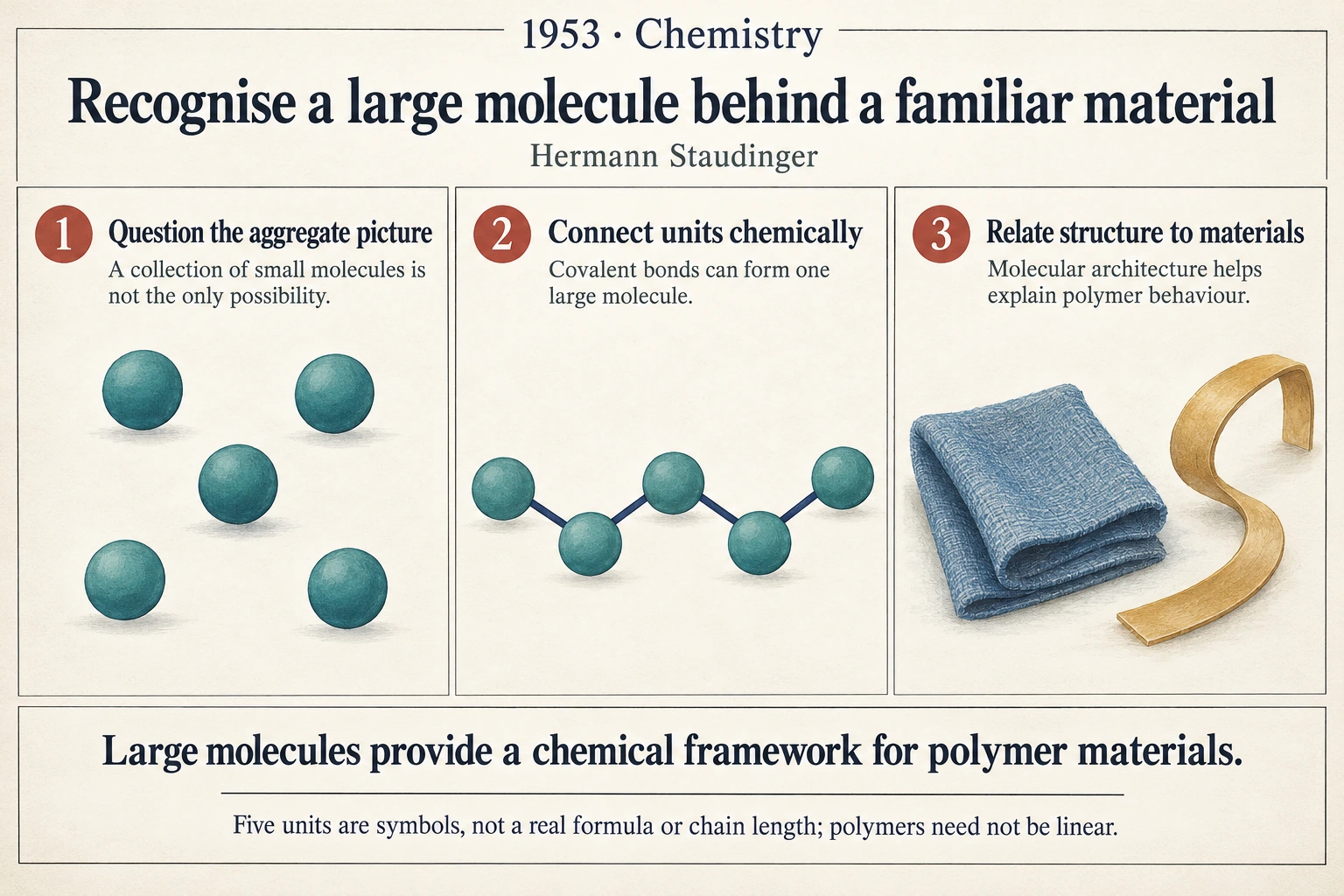
Why do rubber and cellulose behave so differently from ordinary small-molecule substances? One influential explanation treated them as associations of many small molecules. Staudinger argued that chemical bonds can instead connect units into genuinely large molecules.
His 1920 polymerisation paper and subsequent chemical and viscosity studies supported this interpretation. Persistence of polymer properties through suitable chemical changes challenged aggregate explanations. The macromolecular concept gained acceptance and connected molecular architecture with material behaviour. The full 1953 prize recognised discoveries in macromolecular chemistry.
Why it matters
The concept gave natural materials such as rubber and cellulose, and synthetic polymers, a common chemical framework. Researchers and industrial chemists could investigate how connectivity, size and arrangement affect properties. Earlier materials and collective industrial advances were not invented by one laureate.