A life in context
The person behind the prize
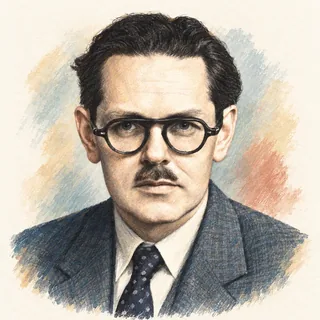
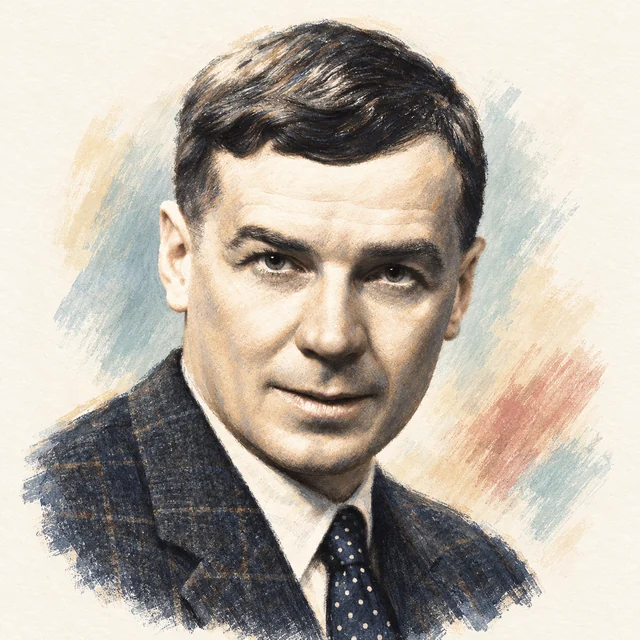
Synge studied classics before turning to natural science at Winchester. At Cambridge he studied physics, chemistry and physiology, then specialised in biochemistry in 1936. Research with N. W. Pirie led to a doctorate in 1941, with part of the work undertaken at the Wool Industries Research Association in Leeds. There he and Martin developed partition chromatography and reported it in 1941. Synge moved to the Lister Institute in 1943. His studies of gramicidin and other peptides showed how separating related molecular fragments could help investigators study more complex substances. A period with Arne Tiselius at Uppsala further developed his interest in analytical methods. In 1948 he became head of protein chemistry at the Rowett Research Institute in Scotland, investigating proteins, peptides and the chemistry of animal nutrition. Rowett was his affiliation for his half of the 1952 prize, distinct from Martin’s London appointment. His later research visit to New Zealand belongs to subsequent history.
The contribution
Synge developed partition chromatography with Martin and applied separation methods to peptides and complex biological materials. He received one half of the Chemistry Prize.
The idea in plain language
Studying a biological material often begins with separating closely related substances. Martin and Synge developed a method in which components distribute differently between two liquid phases. Repeated partition between a stationary phase and a moving phase can make components travel at different rates.
Read the full award story ↗