A life in context
The person behind the prize
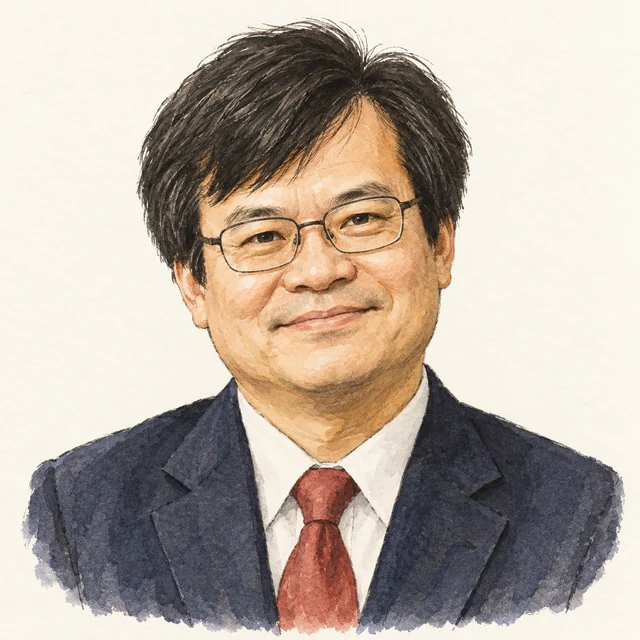
Amano studied electrical engineering at Nagoya University, where he received his doctorate in 1989. As a young researcher working with Isamu Akasaki, he undertook the demanding experimental work of growing gallium nitride crystals on a different material. He later held a professorship at Meijo University before returning to Nagoya. His research connects the way a crystal is made with the electronic behaviour that makes an efficient device possible.
The contribution
He helped establish the use of an aluminium nitride buffer layer to grow better gallium nitride on sapphire. He and Akasaki also found that electron-beam treatment could activate p-type material. Together these results helped turn a promising but troublesome semiconductor into a route to blue LEDs.
The idea in plain language
An LED converts electrical energy into light inside a semiconductor. Electrons and positively charged vacancies, called holes, meet in an active region; some of their energy is released as photons. The material determines the photon energies and therefore the colour. Red and green LEDs existed long before efficient blue ones. Blue photons require a larger energy gap, and the suitable materials were much harder to turn into reliable devices.
Read the full award story ↗