A life in context
The person behind the prize
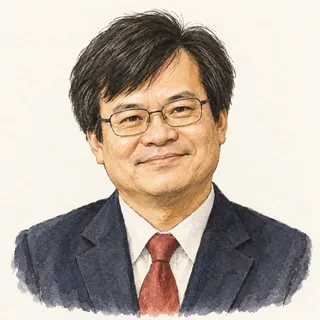
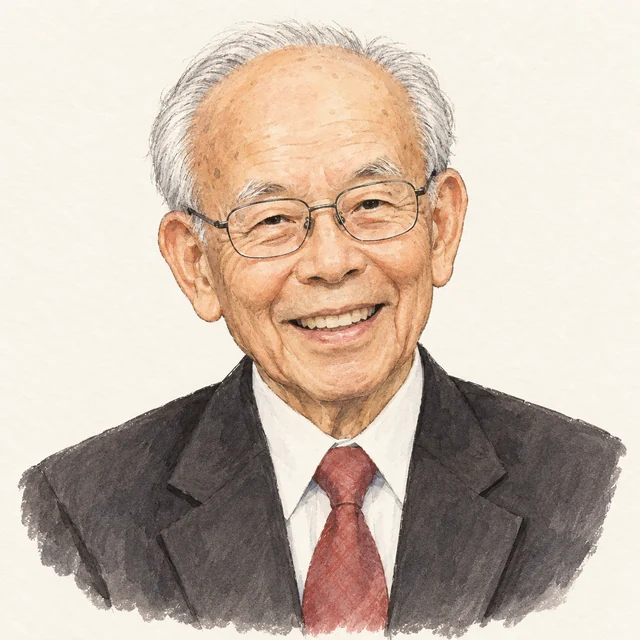
Akasaki studied at Kyoto University and worked in the electronics industry before completing a doctorate at Nagoya University in 1964. His career moved between industrial laboratories and universities. He continued to investigate gallium nitride when making useful devices from it seemed exceptionally difficult. At Nagoya, his collaboration with Hiroshi Amano combined patient crystal-growth experiments with work on the electrical properties needed for a light-emitting diode.
The contribution
Akasaki and Amano developed ways to grow high-quality gallium nitride and obtain a functioning p-type layer. These advances helped overcome two major obstacles to efficient blue LEDs. Their work, alongside Nakamura’s independent developments, enabled practical white-light sources based on semiconductor devices.
The idea in plain language
An LED converts electrical energy into light inside a semiconductor. Electrons and positively charged vacancies, called holes, meet in an active region; some of their energy is released as photons. The material determines the photon energies and therefore the colour. Red and green LEDs existed long before efficient blue ones. Blue photons require a larger energy gap, and the suitable materials were much harder to turn into reliable devices.
Read the full award story ↗