A life in context
The person behind the prize
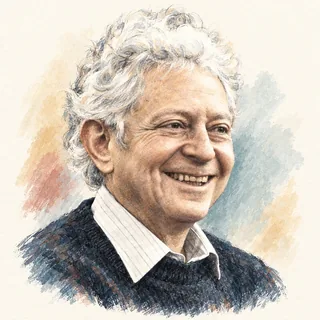
Steinberger left Nazi Germany as a Jewish refugee in 1934, reaching the United States through a children’s rescue programme. A Chicago family supported his education; his parents escaped later. He studied chemistry, worked on wartime radar, and trained in physics with Enrico Fermi. After Berkeley he joined Columbia in 1950, researching particle decays and detectors and mentoring Schwartz. Their neutrino experiment interrupted other research in a productive way. Steinberger joined CERN in 1968 and continued collaborative particle experiments.
The contribution
Steinberger contributed detector expertise and experimental analysis to the 1962 muon-neutrino discovery. The experiment connected the identity of a neutrino with the charged lepton produced in its interaction. Its spark chamber recorded charged-particle tracks, rather than photographing neutrinos themselves. He received one third of the prize alongside Lederman and Schwartz.
The idea in plain language
Neutrinos interact so rarely that studying them requires a source and a way to recognise the few interactions that occur. Schwartz proposed using pions produced by an accelerator. As pions decayed, they supplied muons and neutrinos. A thick steel barrier absorbed the charged particles while neutrinos could pass through to a detector.
Read the full award story ↗