A life in context
The person behind the prize
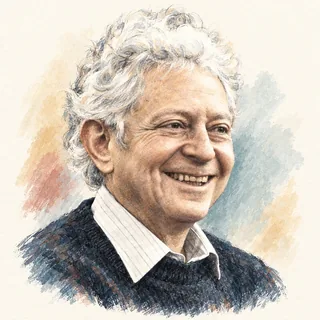
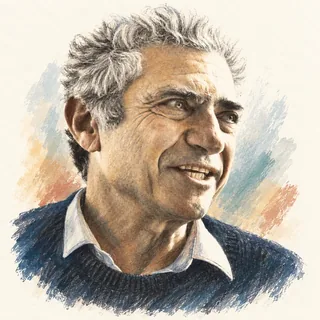
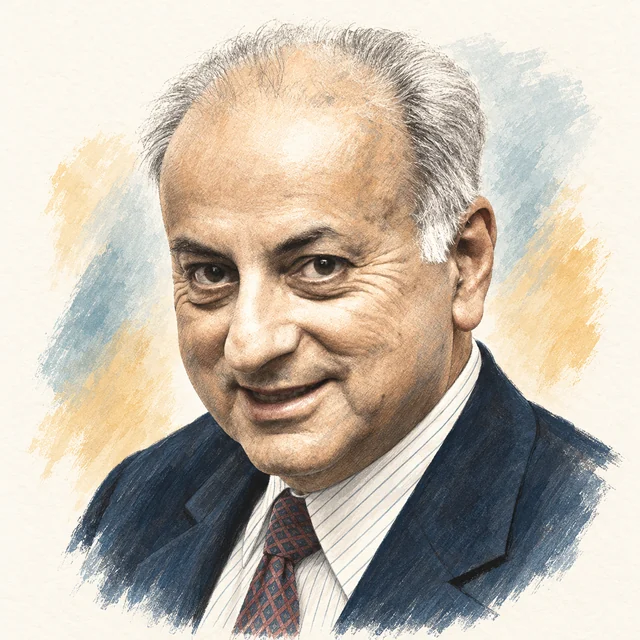
Schwartz attended Bronx High School of Science and began at Columbia in 1949. Steinberger became an important teacher and research mentor. Joining the faculty in 1958, Schwartz explored how an accelerator could provide a useful neutrino beam. Discussions with T. D. Lee and collaboration with Lederman and Steinberger led to the Brookhaven experiment. He moved to Stanford in 1966, later developing Digital Pathways, a data-communications and security company which he headed at the time of the award.
The contribution
Schwartz proposed using decays of accelerator-produced pions to make a neutrino beam. Absorbing the accompanying charged particles left neutrinos able to reach a detector, where rare interactions could be studied. The 1962 experiment found muon production rather than the electron production expected if both neutrino types were identical. He received one third of the prize; his award-time affiliation was Digital Pathways.
The idea in plain language
Neutrinos interact so rarely that studying them requires a source and a way to recognise the few interactions that occur. Schwartz proposed using pions produced by an accelerator. As pions decayed, they supplied muons and neutrinos. A thick steel barrier absorbed the charged particles while neutrinos could pass through to a detector.
Read the full award story ↗