A life in context
The person behind the prize
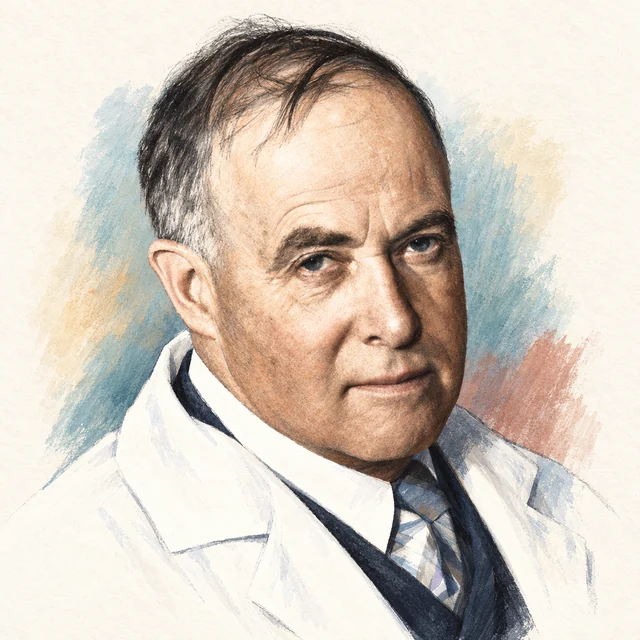
Sumner studied chemistry at Harvard, graduating in 1910 and completing his doctorate in biochemistry in 1914. He joined Cornell in Ithaca that year as an assistant professor and became a full professor in 1929. An accident at seventeen had led to the amputation of his left arm below the elbow, and he encountered prejudice about his prospects in laboratory chemistry. His subsequent research should be described through its scientific work rather than that prejudice. At Cornell he sought to isolate an enzyme in a form that could be studied directly. In 1926 he obtained active crystals of urease from jack beans and argued that the enzyme itself was a protein. His interpretation met resistance before further work, including Northrop’s studies of other enzymes, strengthened the case. He received half of the 1946 Chemistry Prize; Northrop and Stanley each received a quarter. His election to the US National Academy of Sciences in 1948 was a later recognition.
The contribution
Sumner demonstrated that an enzyme could be crystallised and established the protein nature of urease. He received half of the Chemistry Prize; this was not a claim that every biological catalyst must be a protein.
The idea in plain language
An enzyme can make a reaction happen without being easy to isolate from the mixture in which it works. In 1926 Sumner obtained active urease crystals and argued that the enzyme itself was a protein. Northrop and collaborators, including Kunitz, extended purification and characterisation to digestive enzymes such as pepsin and trypsin.
Read the full award story ↗