A life in context
The person behind the prize
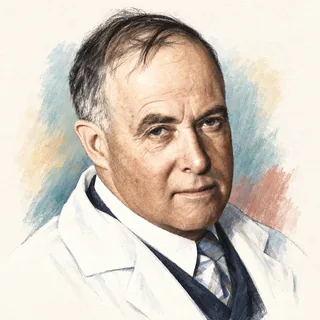
Northrop studied zoology and chemistry at Columbia, receiving his BS in 1912, MA in 1913 and doctorate in chemistry in 1915. A fellowship took him to Jacques Loeb’s laboratory at the Rockefeller Institute, whose staff he joined in 1916. Apart from wartime service, he continued his career there, investigating enzymes and the physical chemistry of proteins. In 1929 he isolated pepsin in crystalline form; work on trypsin, chymotrypsin and other related proteins followed. With collaborators, notably Kunitz, he tested the homogeneity and activity of purified material instead of relying on its appearance as crystals alone. His book Crystalline Enzymes appeared in 1939. The Rockefeller Institute at Princeton was his affiliation for his one-quarter share of the 1946 Chemistry Prize. His University of California appointment in 1949 came later. His contribution strengthened the chemical study of enzymes and helped establish that the enzymes he examined were proteins.
The contribution
Northrop and collaborators prepared and characterised purified enzymes, including digestive enzymes. He received one quarter of the Chemistry Prize, alongside Sumner’s half and Stanley’s quarter.
The idea in plain language
An enzyme can make a reaction happen without being easy to isolate from the mixture in which it works. In 1926 Sumner obtained active urease crystals and argued that the enzyme itself was a protein. Northrop and collaborators, including Kunitz, extended purification and characterisation to digestive enzymes such as pepsin and trypsin.
Read the full award story ↗