A life in context
The person behind the prize
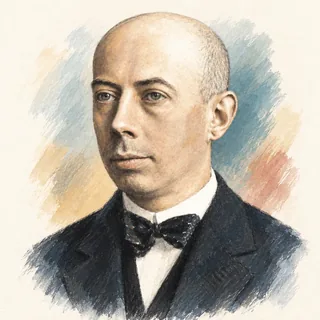
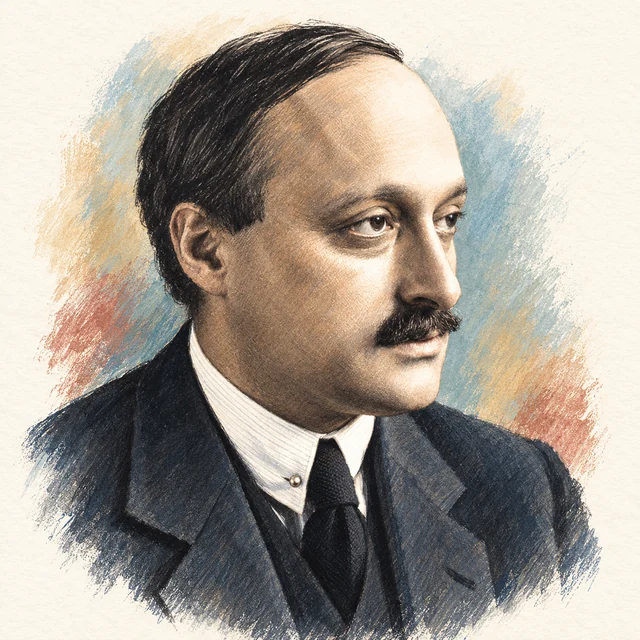
Franck was born in Hamburg and first studied chemistry at Heidelberg before turning to physics in Berlin. He completed his doctorate under Emil Warburg in 1906 and became a university lecturer in 1911. Working with Gustav Hertz, he investigated what happens when free electrons collide with atoms in gases. Their 1914 experiments became important evidence that atoms exchange energy in definite amounts rather than accepting any arbitrary increment. Franck moved to Göttingen in 1920, where experimental work and collaboration with Max Born’s theoretical group helped make the university a centre of quantum physics. He received half the 1925 Physics Prize, awarded in 1926. His later work included molecular spectroscopy and photochemistry. He resigned from Göttingen in 1933 in protest against Nazi racial policies and eventually worked in the United States. During the Second World War he participated in atomic research; the 1945 Franck Report argued for a demonstration of the bomb instead of its unannounced military use. These later activities were distinct from his Nobel-recognised collision experiments. He died in 1964.
The contribution
Franck shared the Physics Prize equally with Hertz for discovering laws governing electron impacts on atoms. Their experiments helped establish the discrete energy exchanges associated with atomic excitation.
The idea in plain language
Could an atom accept any small amount of energy, or only particular amounts? Franck and Hertz investigated by sending electrons through a gas and varying the energy supplied to them. The measured electrical current showed changes that could be connected with electrons losing energy in collisions with atoms.
Read the full award story ↗