A life in context
The person behind the prize
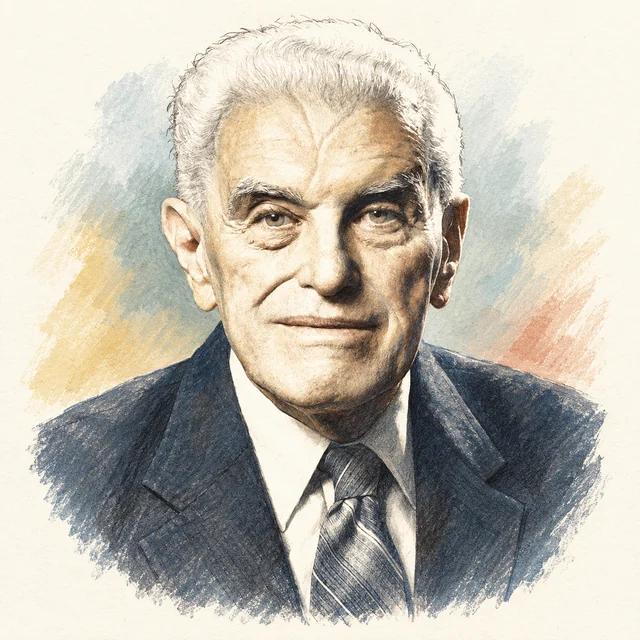
Harsanyi studied pharmacy and philosophy in Budapest, surviving wartime persecution before returning to academic work. He and his wife left Hungary in 1950 and built a new life in Australia. Economics and further study at Stanford led toward research in the United States and a position at Berkeley. His interests connected strategic choice with information, welfare and moral philosophy.
The contribution
Harsanyi developed a way to analyse strategic situations in which players do not know one another’s preferences or other relevant private characteristics. Representing players as possible types, with beliefs about those types, made incomplete information part of the model. His 1967–1968 work laid foundations for Bayesian game analysis. The method models uncertainty; it does not make private information publicly observable.
The idea in plain language
A firm setting a price, a negotiator making an offer or a policymaker announcing a rule may need to anticipate others’ responses. Nash supplied a general equilibrium concept: with everyone else’s strategies fixed, no player can improve their own payoff by changing alone. For games with finite players and finite strategy sets, mixed strategies allow an existence theorem beyond two-person zero-sum situations.
Read the full award story ↗