A life in context
The person behind the prize
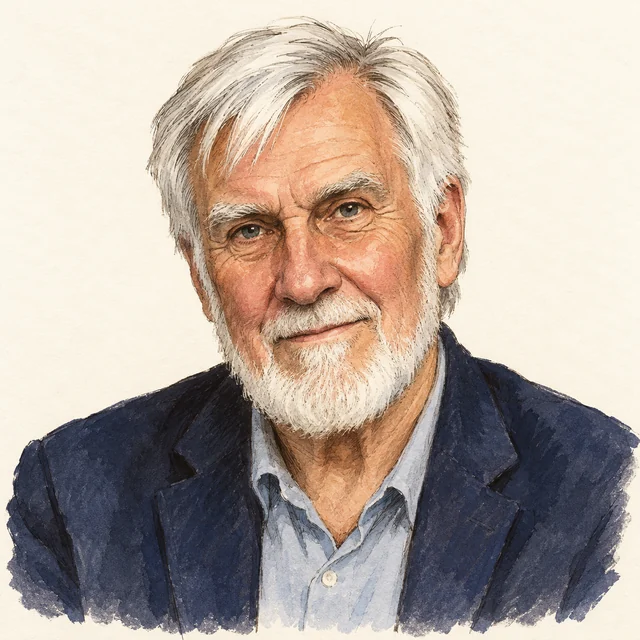
O’Keefe grew up in New York and received a doctorate in physiological psychology at McGill University in 1967. He then moved to University College London, where he developed a long research career in neuroscience. He combined recordings from individual nerve cells with observations of freely moving animals. Instead of treating navigation only as a pattern of outward behaviour, he investigated how activity inside the brain relates to a particular location.
The contribution
In 1971, O’Keefe and his collaborator Jonathan Dostrovsky reported hippocampal neurons that fired in relation to where a rat was. Different place cells could be active in different parts of an environment. The finding supplied a cellular basis for investigating an internal representation of space and its relation to memory.
The idea in plain language
Finding a familiar doorway requires more than recognising an image. An animal must relate where it is to places it has visited and to its own movement. O’Keefe recorded neurons in the hippocampus of freely moving rats. In 1971, he and Jonathan Dostrovsky reported cells whose activity depended on the animal’s location. One place cell could be especially active in one part of an environment, while others responded in different regions.
Read the full award story ↗