A life in context
The person behind the prize
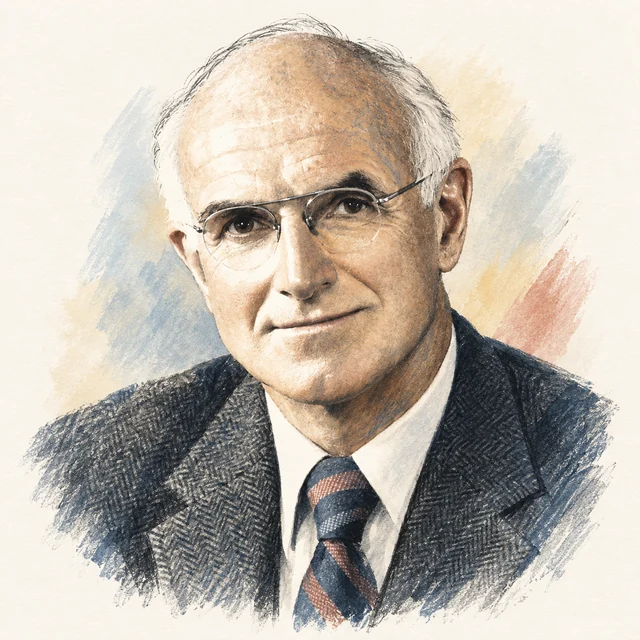
Murray studied at Holy Cross and Harvard Medical School. Wartime treatment of burns and skin grafts at Valley Forge brought him into contact with transplant rejection. In Boston he combined reconstructive surgery, animal studies and clinical work. His team performed the landmark 1954 kidney transplant between identical twins. Later collaboration with Roy Calne, George Hitchings, Gertrude Elion and others developed drug-supported transplantation between genetically different people.
The contribution
Murray established surgical approaches for kidney transplantation and helped bring control of immune rejection into clinical practice. The 1954 identical-twin transplant bypassed the major genetic immune barrier; it did not use the irradiation and drug protocols developed later. His lecture distinguishes that operation from subsequent irradiation experiments and a successful drug-treated deceased-donor transplant in 1962. He shared the prize equally with Thomas for discoveries concerning organ and cell transplantation.
The idea in plain language
Replacing a failing organ or a diseased blood-forming system requires more than transferring material. The recipient’s immune system can recognise a graft as foreign and reject it. Murray’s team established kidney transplantation between identical twins in 1954, bypassing this major immune incompatibility. Subsequent work with colleagues developed methods for transplanting kidneys between genetically different people, including drug-supported control of rejection.
Read the full award story ↗