A life in context
The person behind the prize
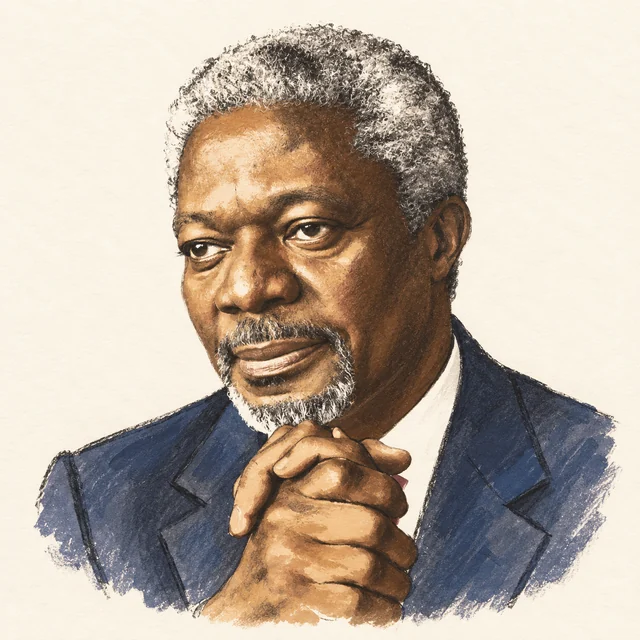
Annan was born in Kumasi in what was then the Gold Coast, now Ghana. He studied in Ghana, the United States and Switzerland, and later earned a management degree at MIT. He joined the UN system in 1962 at the World Health Organization. A long international civil-service career included leadership of peacekeeping operations as Under-Secretary-General. He became UN Secretary-General on 1 January 1997.
The contribution
Annan’s half of the joint award recognised his work to strengthen and renew the United Nations. The committee highlighted efforts involving human rights, development and the response to HIV/AIDS, as well as his role in international cooperation. His contribution was personal leadership within a large institution, not sole responsibility for all its achievements. The shared prize also acknowledged the organisation and the many people whose work made its activities possible.
The idea in plain language
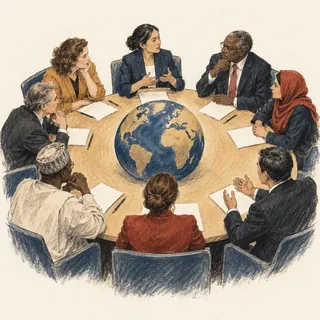
Conflicts, displacement, poverty and disease cross borders, while political authority is largely organised into states. The United Nations provides a continuing framework in which states can negotiate, coordinate assistance and address shared problems. Founded through its 1945 Charter, it combines a meeting place with institutions and operations whose powers depend on agreed rules and member-state support.
Read the full award story ↗