The organisation
A collective voice
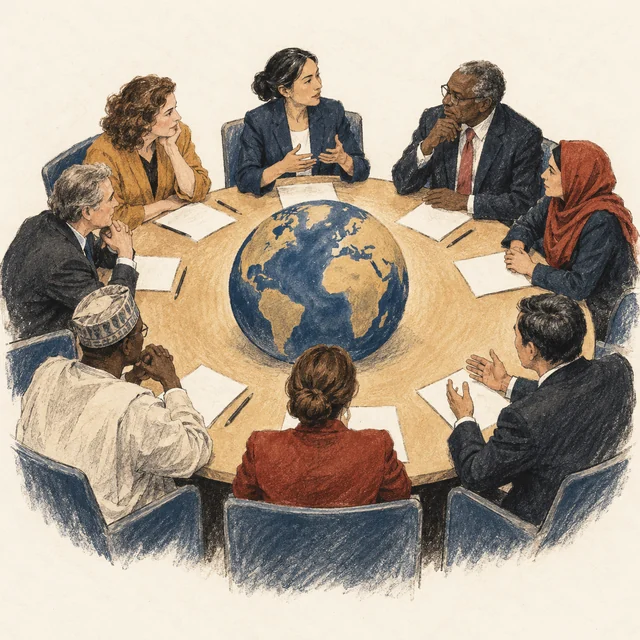
The United Nations was founded in 1945 after the Second World War. Its Charter was signed in San Francisco on 26 June and entered into force on 24 October. With headquarters in New York, the organisation provides institutions through which member states negotiate and cooperate. Its work spans peace and security, human rights, development and humanitarian assistance. It is an organisation of states with distinct interests, rather than an independent world government.
The contribution
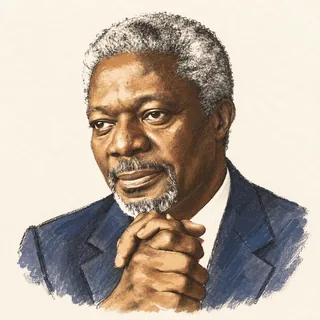
The 2001 Peace Prize jointly recognised the United Nations and Secretary-General Kofi Annan for work toward a more organised and peaceful world. The organisation supplies forums, agencies and operations through which collective action becomes possible. The award also placed expectations on the UN: its principles require sustained effort, while its ability to act depends on mandates, resources and cooperation from member states. Recognition did not erase failures or make every operation successful.
The idea in plain language
Conflicts, displacement, poverty and disease cross borders, while political authority is largely organised into states. The United Nations provides a continuing framework in which states can negotiate, coordinate assistance and address shared problems. Founded through its 1945 Charter, it combines a meeting place with institutions and operations whose powers depend on agreed rules and member-state support.
Read the full award story ↗