A life in context
The person behind the prize
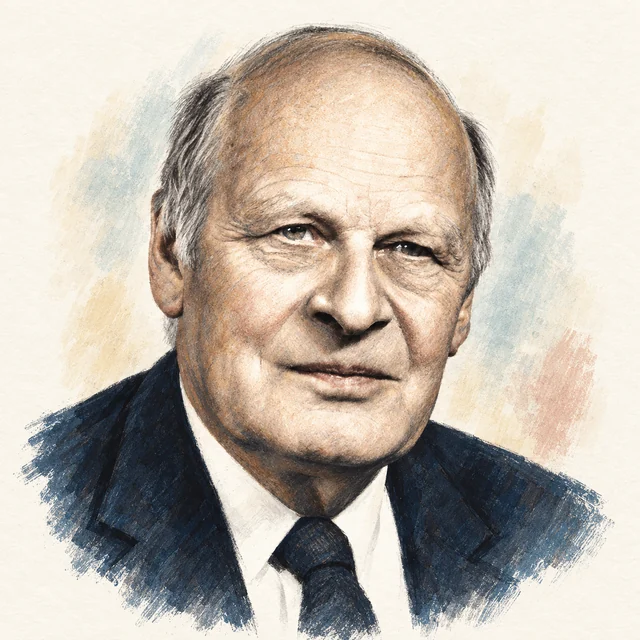
Onsager graduated in chemical engineering from Norway’s technical college in 1925. Work with Debye and Hückel in Zurich helped develop his theory of electrolytes and statistical physics. Moving to the United States in 1928, he taught briefly at Johns Hopkins and then at Brown. His reciprocal relations were presented in 1929 and published in two papers in 1931. They connected microscopic reversibility with relationships among appropriately defined transport-response coefficients. He joined Yale in 1933, earned his doctorate there in 1935 and became Josiah Willard Gibbs Professor of Theoretical Chemistry in 1945. His research also included ordering transitions, superfluids and other problems. The prize specifically recognised the reciprocal relations, rather than every part of that wider work. Yale was his 1968 affiliation; later appointments and honours mentioned in the biography are subsequent history.
The contribution
Onsager discovered reciprocal relations fundamental to the thermodynamics of irreversible processes. He received the full Chemistry Prize.
The idea in plain language
Irreversible transport carries a system toward equilibrium, as with heat flowing from warmer to cooler regions. When processes are coupled, one thermodynamic driving difference can influence more than one flow.
Read the full award story ↗

