A life in context
The person behind the prize
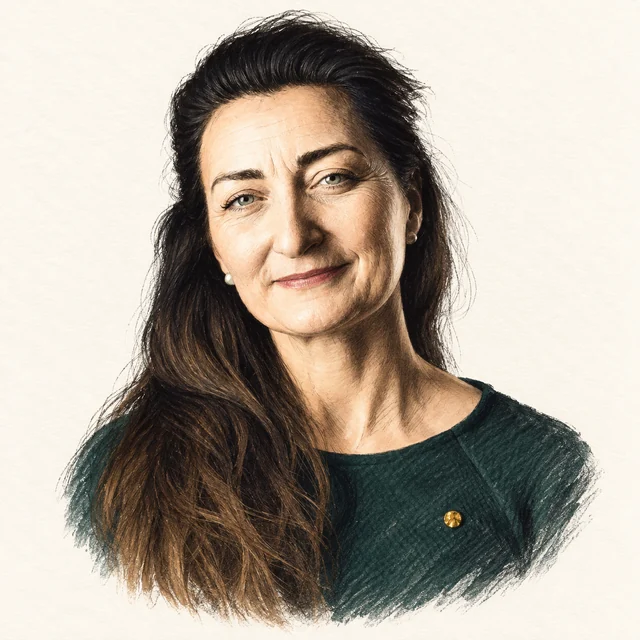
May-Britt Moser studied psychology at the University of Oslo and earned her doctorate in neurophysiology in 1995. Research stays in Edinburgh and London helped develop the experimental approach she and Edvard Moser brought to Trondheim. At the Norwegian University of Science and Technology, their group studied how the hippocampus and surrounding brain regions represent space. The work linked careful behavioural experiments with recordings from neurons.
The contribution
In 2005, she and Edvard Moser’s team identified grid cells in the entorhinal cortex. One cell fired at multiple locations forming a repeating, approximately hexagonal pattern as a rat explored. The pattern describes locations in the animal’s environment, not a grid of neurons physically arranged inside the brain.
The idea in plain language
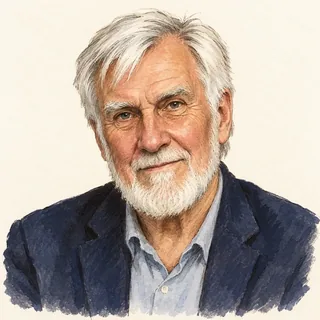
Finding a familiar doorway requires more than recognising an image. An animal must relate where it is to places it has visited and to its own movement. O’Keefe recorded neurons in the hippocampus of freely moving rats. In 1971, he and Jonathan Dostrovsky reported cells whose activity depended on the animal’s location. One place cell could be especially active in one part of an environment, while others responded in different regions.
Read the full award story ↗