A life in context
The person behind the prize
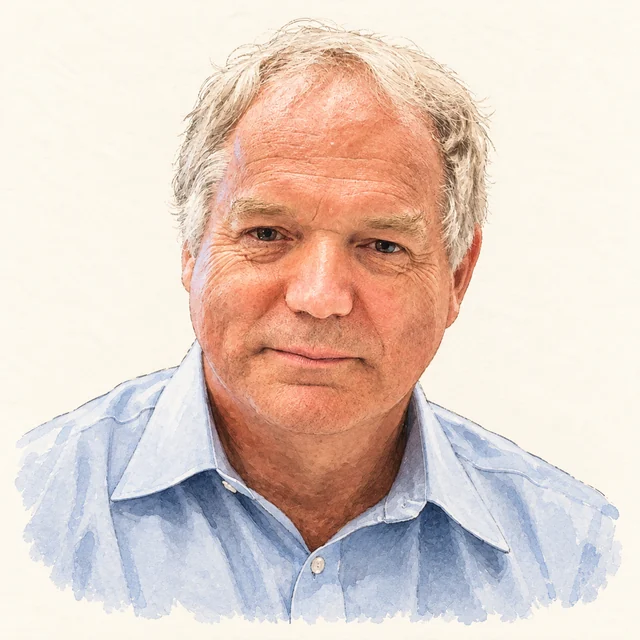
Houghton earned his doctorate at King’s College London in 1977. He worked in pharmaceutical research and joined Chiron in California in 1982, where a team pursued the elusive cause of non-A, non-B hepatitis. He moved to the University of Alberta in 2010. His career combined molecular biology with the practical challenge of identifying a virus that resisted conventional detection.
The contribution
His team used a molecular cloning strategy and antibodies from infected patients to identify genetic material from a previously unknown RNA virus in 1989. Naming it hepatitis C made it possible to develop targeted blood-screening tests.
The idea in plain language
Some patients developed hepatitis after transfusions even when the blood had been screened for hepatitis B, and hepatitis A did not explain the cases. Alter’s studies showed that another infectious agent was involved. The illness had a description—non-A, non-B hepatitis—but its cause still lacked an identity.
Read the full award story ↗