01 · The discovery
The idea, in everyday language
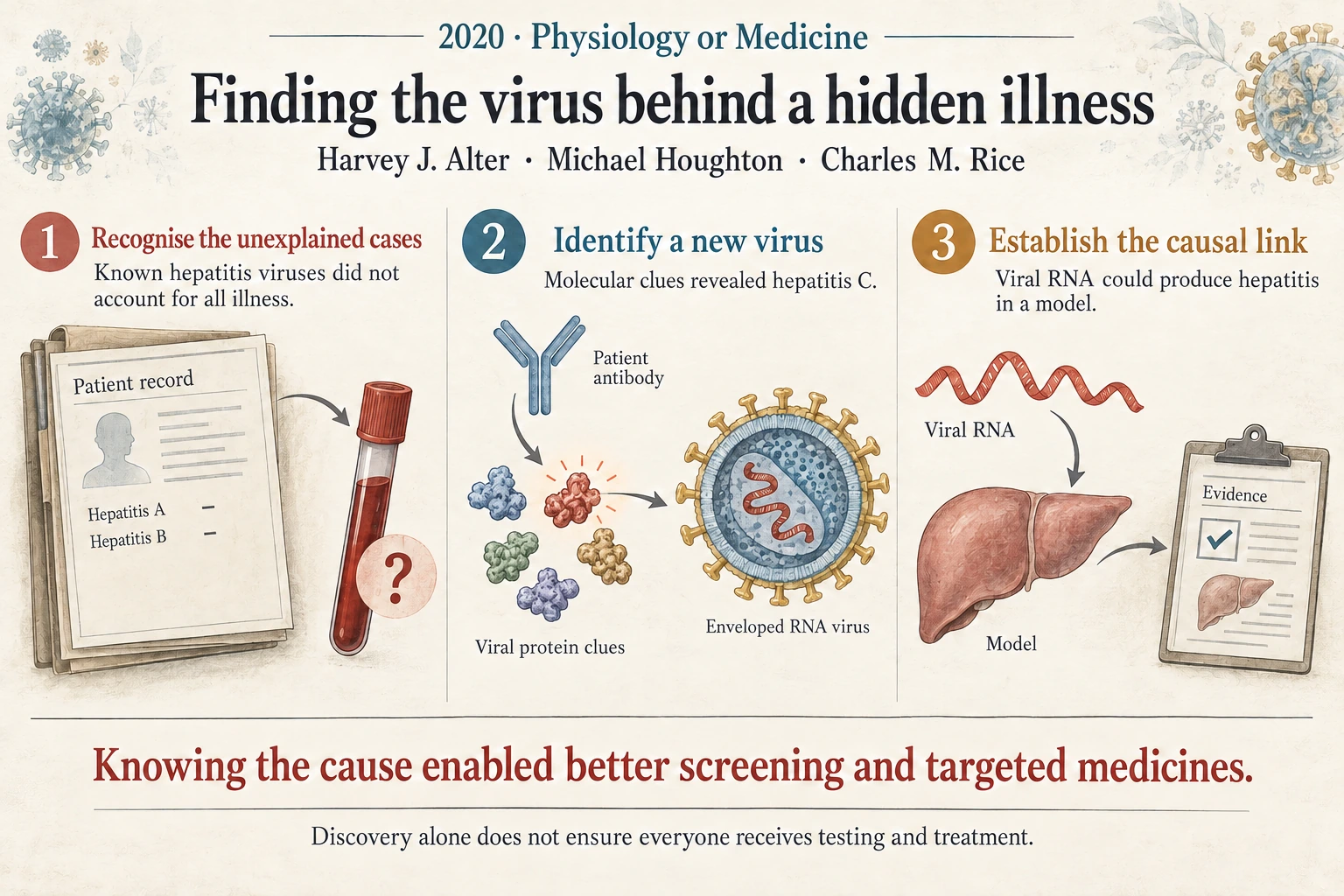
Some patients developed hepatitis after transfusions even when the blood had been screened for hepatitis B, and hepatitis A did not explain the cases. Alter’s studies showed that another infectious agent was involved. The illness had a description—non-A, non-B hepatitis—but its cause still lacked an identity.
Houghton’s team searched genetic material using antibodies from infected patients and identified a new RNA virus. Rice and colleagues then showed that a reconstructed viral RNA genome could cause hepatitis in an experimental model. The sequence of evidence moved from an unexplained disease to a named virus and a demonstrated causal link.
Why it matters
Identifying hepatitis C enabled sensitive blood tests and helped make transfusions much safer where screening was implemented. Understanding the virus also supported the development of targeted antiviral medicines that can cure infection. Access to testing and treatment remains essential to turning a discovery into public-health benefit.