c.curionodeThe Nobel Archive

2022 · Physiology or Medicine

Reading the DNA of our lost relatives

Ancient genomes revealed extinct human groups and traces of their encounters with our ancestors.

Ancient DNAHuman evolutionPalaeogenomics
2022Physiology or Medicine

Visual guide

The prize, pictured

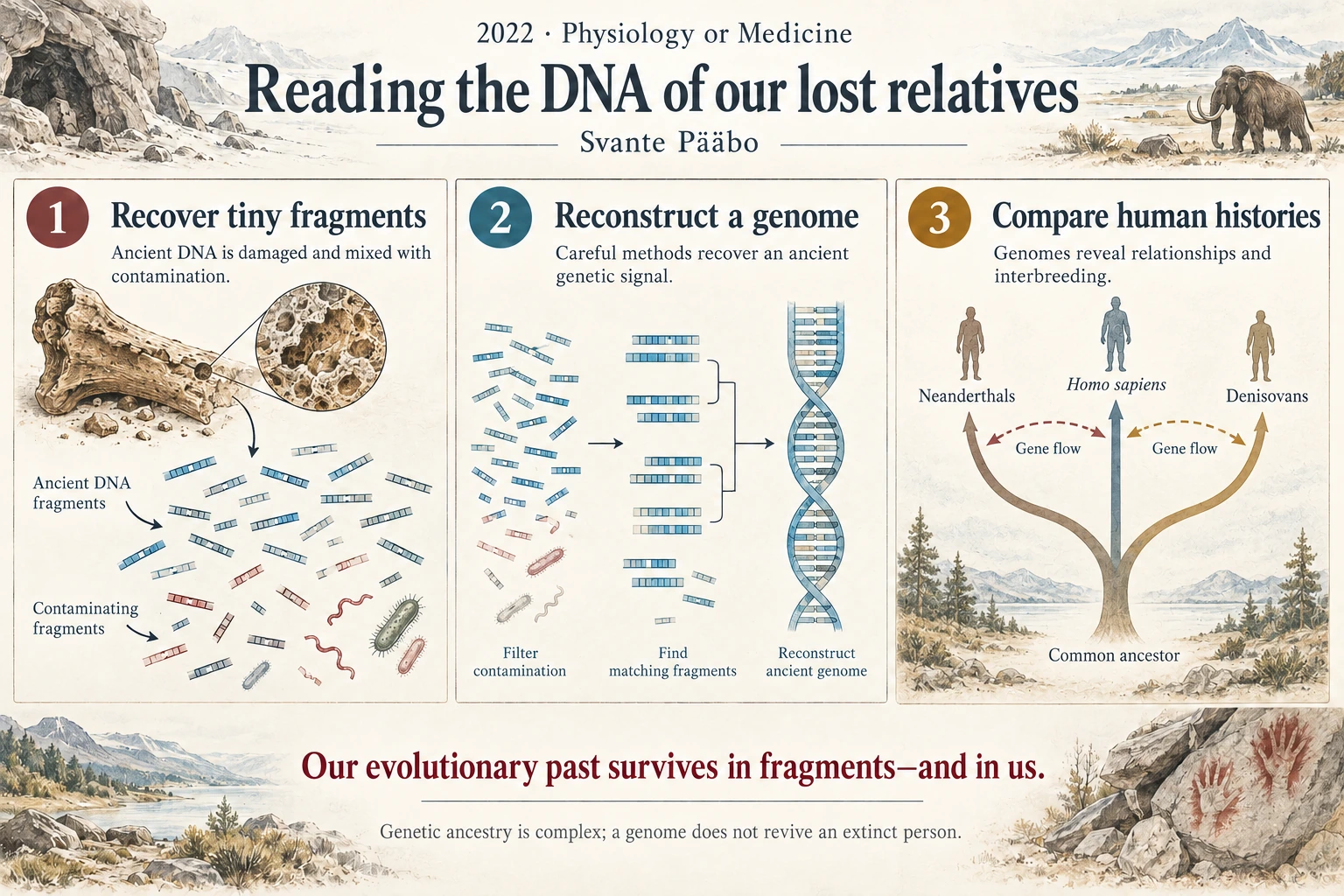
Infographic explaining Reading the DNA of our lost relatives
Original AI-generated infographic. A conceptual overview; the explanations and sources below provide context.
Read the poster text

Our evolutionary past survives in fragments—and in us.

  1. Recover tiny fragments

    Ancient DNA is damaged and mixed with contamination.

  2. Reconstruct a genome

    Careful methods recover an ancient genetic signal.

  3. Compare human histories

    Genomes reveal relationships and interbreeding.

Genetic ancestry is complex; a genome does not revive an extinct person.

01 · The discovery

The idea, in everyday language

DNA does not stay intact after an organism dies. It breaks into short, chemically damaged fragments and mixes with DNA from microbes and modern people. Pääbo developed methods for recovering the ancient signal from this difficult material.

His teams reconstructed a Neanderthal genome and identified Denisovans from DNA in a small finger-bone fragment. Comparing ancient and present-day genomes revealed interbreeding: some DNA from these extinct groups survives in people today. Human evolution became something scientists could investigate at the level of inherited sequences.

Why it matters

Ancient DNA adds direct genetic evidence to archaeology and fossil research. It helps explain migrations, relationships and inherited biological traits, while opening new questions about what distinguishes our species.

02 · The people

Who brought the idea to life?

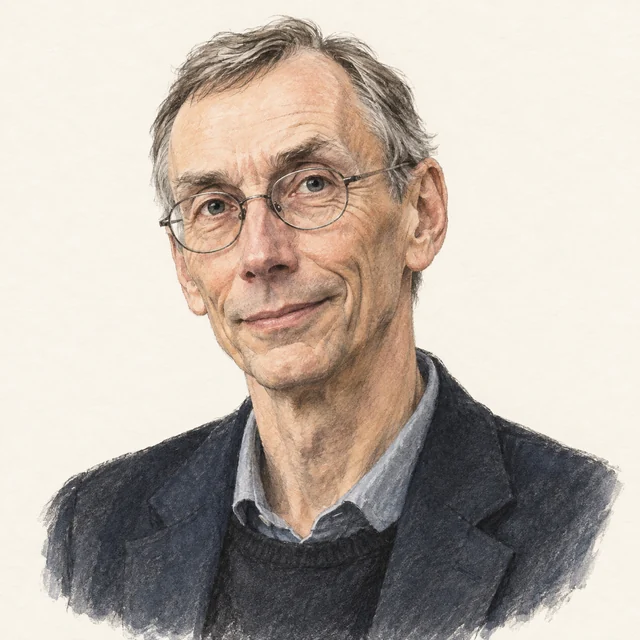
Illustrated portrait of Svante Pääbo

Svante Pääbo

Prize share · 1/1

He and his teams developed methods to distinguish ancient DNA from damage and contamination, produced a Neanderthal genome and identified Denisovans through DNA from a small bone. Comparisons revealed gene flow between extinct human groups and ancestors of people living today.

Read the biography ↗

03 · Years in the making

The path here

  1. 1997

    Pääbo’s team reports mitochondrial DNA from a Neanderthal.

  2. 2010

    A draft Neanderthal genome provides evidence of gene flow into modern humans.

  3. 2010

    DNA analysis identifies the previously unknown Denisovan group.

04 · Read further

From the original sources

Original explanations by Curionode, based on the official records below. Biographical details and affiliations refer to the award year.

  1. Official award announcement nobelprize.org
  2. Scientific background nobelprize.org

More in Physiology or Medicine

Browse this subject ↗