c.curionodeThe Nobel Archive

2023 · Physiology or Medicine

A message the cell can use

A small chemical change to messenger RNA helped make a new kind of vaccine possible.

RNAVaccinesImmunity
2023Physiology or Medicine

Visual guide

The prize, pictured

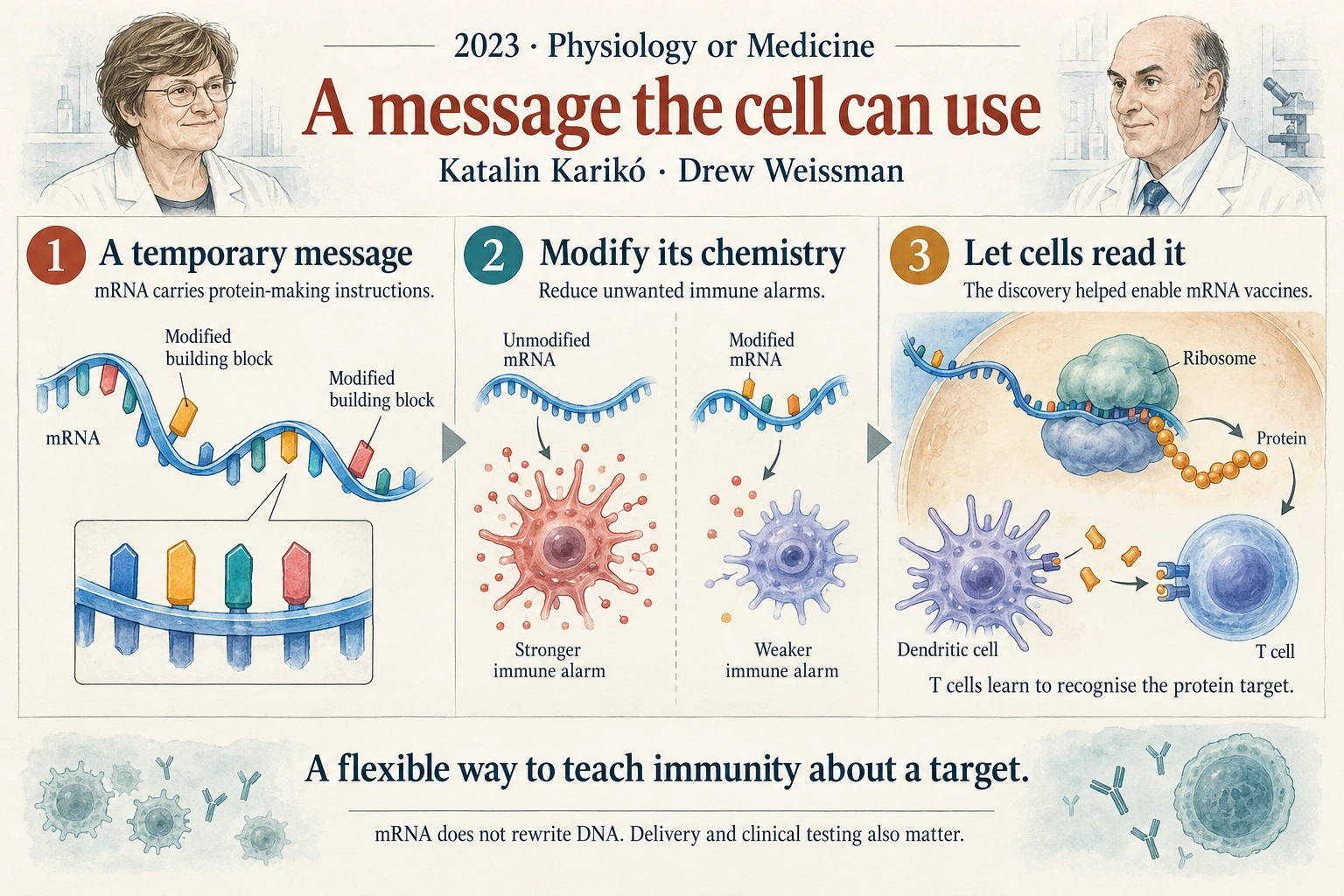
Infographic explaining A message the cell can use
Original AI-generated infographic. A conceptual overview; the explanations and sources below provide context.
Read the poster text

A flexible way to teach immunity about a target.

  1. A temporary message

    mRNA carries protein-making instructions.

  2. Modify its chemistry

    Reduce unwanted immune alarms.

  3. Let cells read it

    The discovery helped enable mRNA vaccines.

mRNA does not rewrite DNA. Delivery and clinical testing also matter.

01 · The discovery

The idea, in everyday language

Messenger RNA is a temporary working copy of genetic instructions. Cells read it to make proteins. Early attempts to use laboratory-made mRNA ran into a problem: immune cells reacted strongly to the message itself.

Karikó and Weissman found that modifying some of RNA’s chemical building blocks reduced this unwanted response and could improve protein production. That basic discovery became a key part of the platform used in effective mRNA vaccines against COVID-19.

Why it matters

The work enabled a flexible vaccine approach: change the encoded message to teach the immune system about a different target. Delivery systems, manufacturing and clinical trials were also essential.


02 · The people

Who brought the idea to life?

Illustrated portrait of Katalin Karikó

Katalin Karikó

Prize share · 1/2

With Weissman, she showed that modifying certain building blocks of laboratory-made mRNA could reduce unwanted inflammatory responses. Their experiments also helped explain how modified mRNA could produce proteins more efficiently.

Read the biography ↗
Illustrated portrait of Drew Weissman

Drew Weissman

Prize share · 1/2

He and Karikó investigated why immune cells reacted strongly to laboratory-made mRNA. Their work identified chemical modifications that made the message more usable, providing an essential foundation for later mRNA vaccines.

Read the biography ↗

03 · Years in the making

The path here

  1. 2005

    The collaborators report how modified RNA changes immune recognition.

  2. 2008–2010

    Further studies show improved protein production.

  3. 2020

    The platform becomes central to COVID-19 vaccine development.

04 · Read further

From the original sources

Original explanations by Curionode, based on the official records below. Biographical details and affiliations refer to the award year.

  1. Official award announcement nobelprize.org
  2. Scientific background nobelprize.org

More in Physiology or Medicine

Browse this subject ↗