c.curionodeThe Nobel Archive

2025 · Physiology or Medicine

How immunity learns when to stop

Regulatory T cells and a crucial gene revealed a control system that protects our own tissues.

ImmunityGenesSelf-tolerance
2025Physiology or Medicine

Visual guide

The prize, pictured

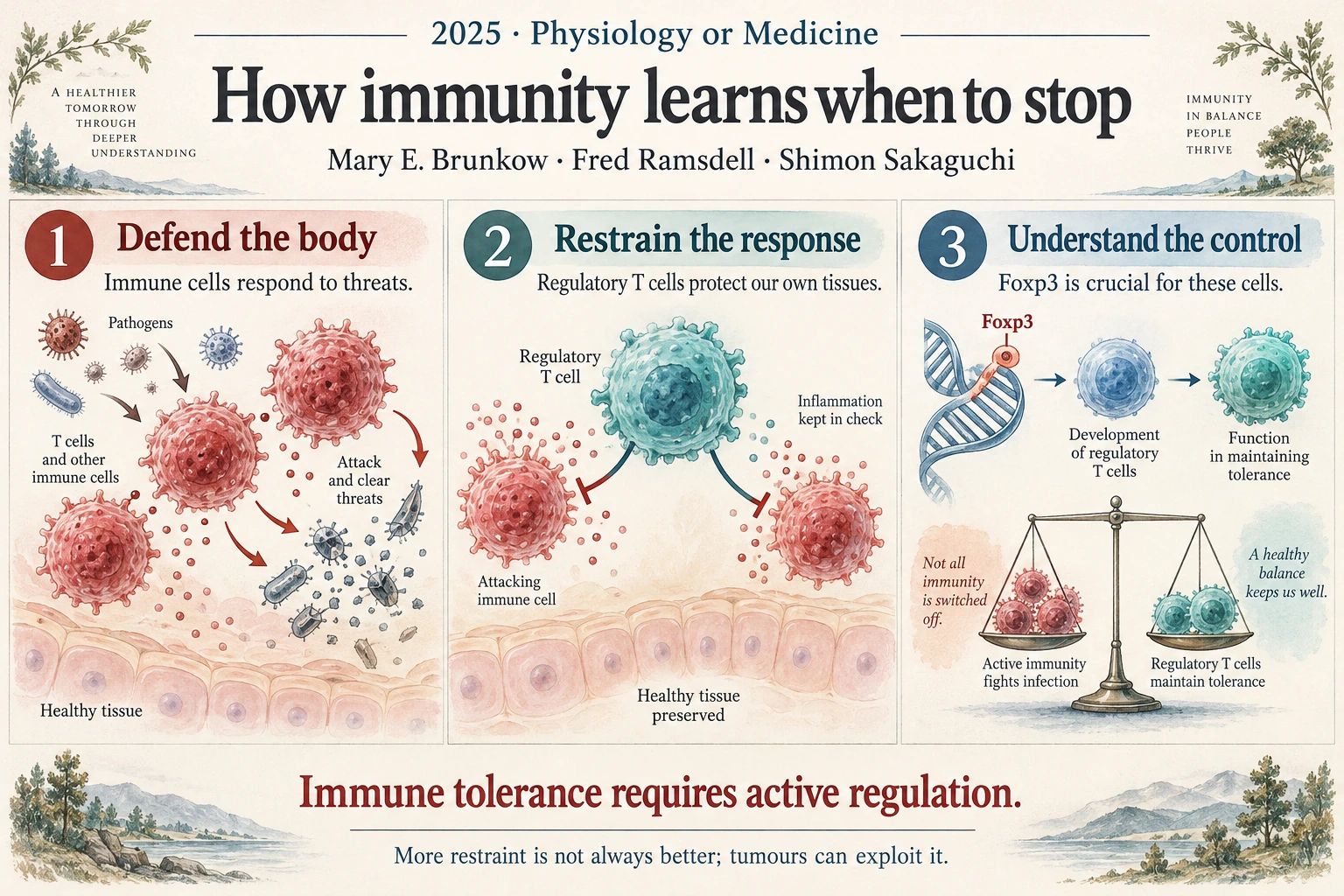
Infographic explaining How immunity learns when to stop
Original AI-generated infographic. A conceptual overview; the explanations and sources below provide context.
Read the poster text

Immune tolerance requires active regulation.

  1. Defend the body

    Immune cells respond to threats.

  2. Restrain the response

    Regulatory T cells protect our own tissues.

  3. Understand the control

    Foxp3 is crucial for these cells.

More restraint is not always better; tumours can exploit it.

01 · The discovery

The idea, in everyday language

An immune system must fight threats without destroying the body. Removing some dangerous cells early in their development is not enough: immune responses also need active restraint in the rest of the body.

Sakaguchi identified regulatory T cells that provide that restraint. Brunkow and Ramsdell linked a severe immune disorder to the gene Foxp3. The connection between Foxp3 and regulatory T cells helped explain a central mechanism of peripheral immune tolerance.

Why it matters

These discoveries guide research into autoimmune disease, transplantation and cancer, where the desired direction of immune regulation may differ.


02 · The people

Who brought the idea to life?

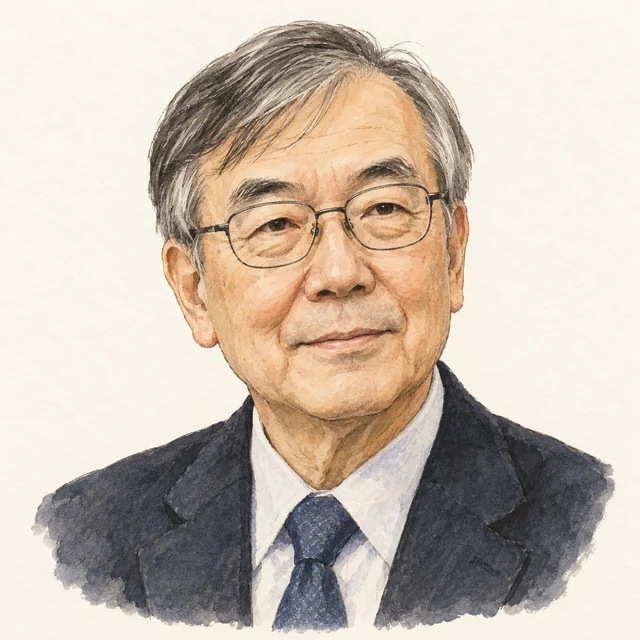
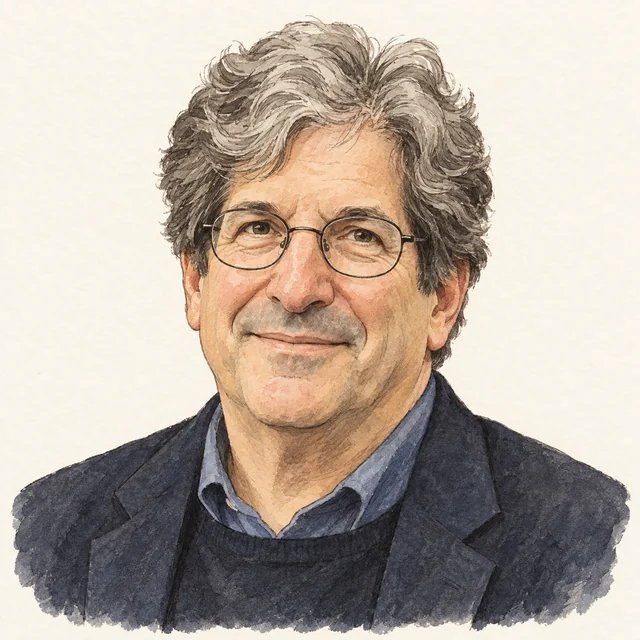
Illustrated portrait of Mary E. Brunkow

Mary E. Brunkow

Prize share · 1/3

In 2001, Brunkow and Ramsdell identified mutations in the Foxp3 gene in scurfy mice. Related mutations in humans cause IPEX, connecting a genetic clue with dangerous failures of immune self-control.

Read the biography ↗
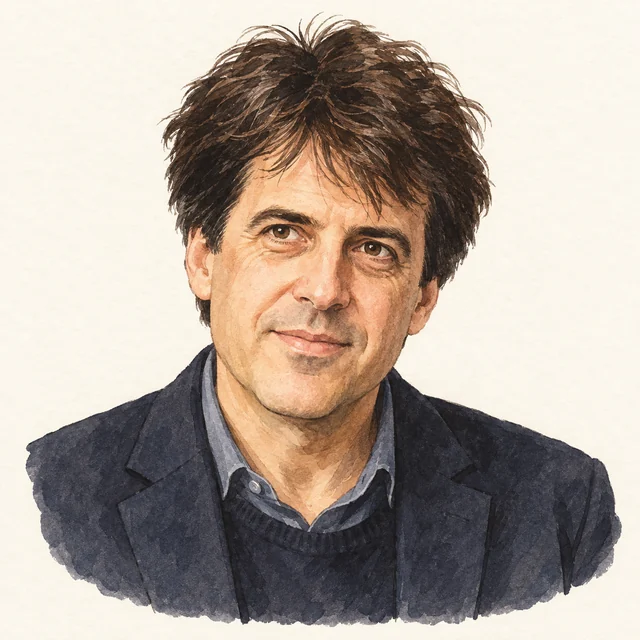
Illustrated portrait of Fred Ramsdell

Fred Ramsdell

Prize share · 1/3

With Brunkow, he linked severe immune dysregulation to Foxp3. Combined with Sakaguchi’s work, that discovery helped explain the development and function of regulatory T cells.

Read the biography ↗
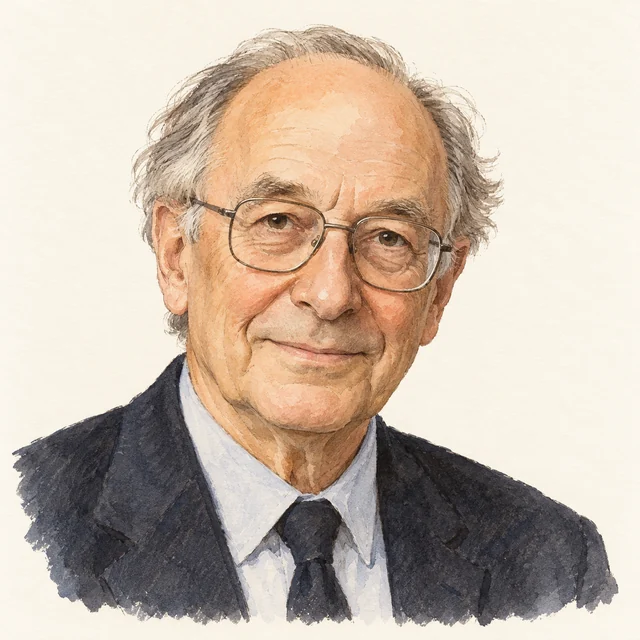
Illustrated portrait of Shimon Sakaguchi

Shimon Sakaguchi

Prize share · 1/3

In 1995, he identified regulatory T cells that restrain immune responses. Later research connected these cells to Foxp3, bringing together the cellular and genetic explanations of peripheral immune tolerance.

Read the biography ↗

03 · Years in the making

The path here

  1. 1995

    Sakaguchi identifies regulatory T cells.

  2. 2001

    Brunkow and Ramsdell identify the Foxp3 mutation in scurfy mice.

  3. 2003

    Research connects Foxp3 with regulatory T-cell development and function.

04 · Read further

From the original sources

Original explanations by Curionode, based on the official records below. Biographical details and affiliations refer to the award year.

  1. Official award announcement nobelprize.org
  2. Scientific background nobelprize.org

More in Physiology or Medicine

Browse this subject ↗