A life in context
The person behind the prize
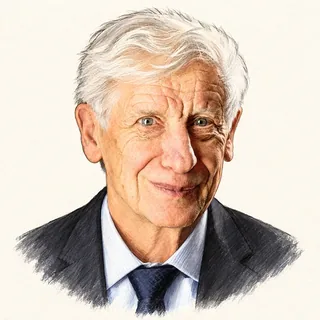
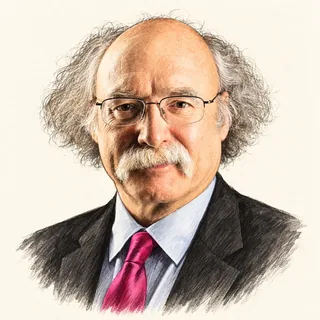
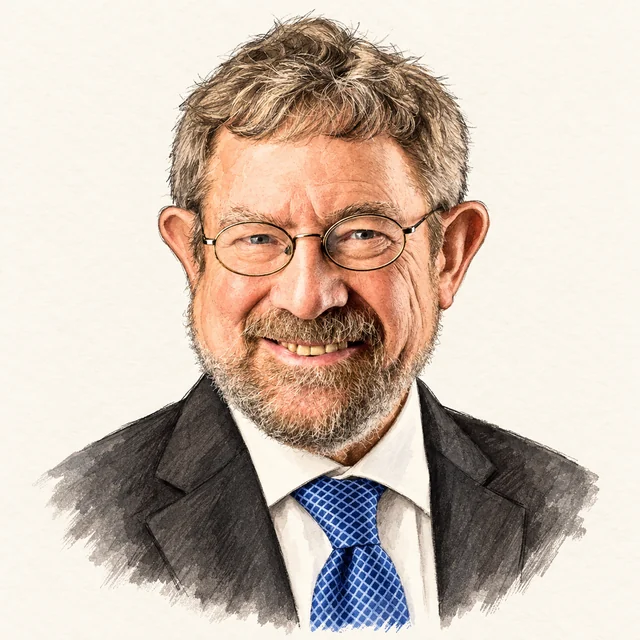
Kosterlitz was born in Aberdeen to parents who had fled Nazi Germany. He studied at Cambridge and earned his doctorate at Oxford in 1969. At Birmingham he began the collaboration with David Thouless that led to a new account of phase transitions in thin systems. He joined Brown University as a professor in 1982. His route into this problem brought together mathematical reasoning and curiosity about how order can survive fluctuations.
The contribution
He and Thouless showed how vortices of opposite circulation can remain bound in pairs at low temperature and separate at a transition. This explains a change in collective behaviour without the conventional pattern of ordinary long-range order breaking down.
The idea in plain language
Water freezing is a familiar change of phase. In very thin materials, however, a different kind of transition can happen. Imagine arrows on a sheet recording a local direction. Around certain points the arrows wind all the way round: these are vortices. Kosterlitz and Thouless showed that opposite vortices can bind together at low temperature. When they separate, the collective behaviour changes, even though the usual description in terms of ordinary long-range order does not apply.
Read the full award story ↗