c.curionodeThe Nobel Archive

2016 · Physics

When the whole pattern matters

Topology revealed forms of order that ordinary pictures of matter could miss.

topologyvorticesquantum matter
2016Physics

Visual guide

The prize, pictured

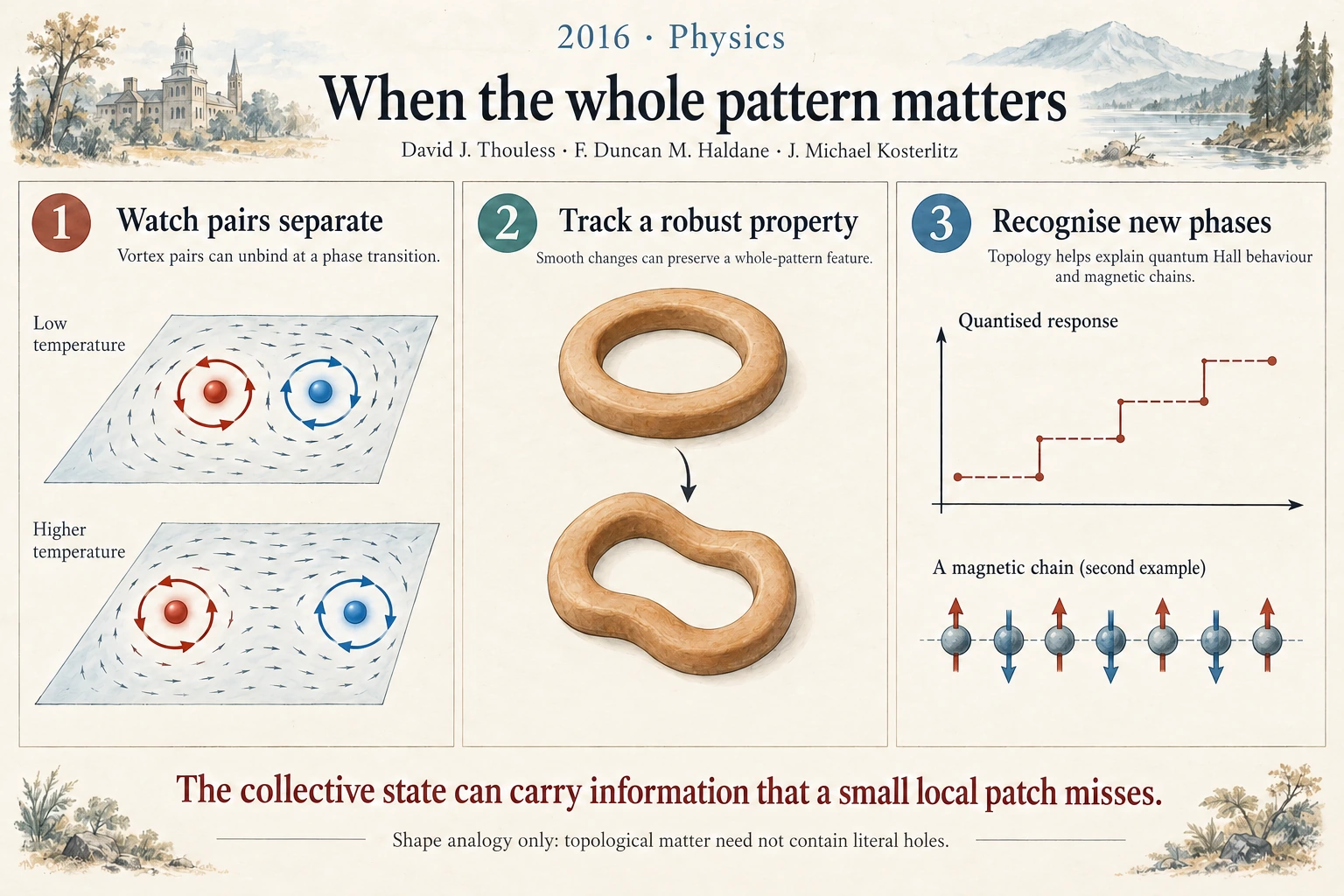
Infographic explaining When the whole pattern matters
Original AI-generated infographic. A conceptual overview; the explanations and sources below provide context.
Read the poster text

The collective state can carry information that a small local patch misses.

  1. Watch pairs separate

    Vortex pairs can unbind at a phase transition.

  2. Track a robust property

    Smooth changes can preserve a whole-pattern feature.

  3. Recognise new phases

    Topology helps explain quantum Hall behaviour and magnetic chains.

Shape analogy only: topological matter need not contain literal holes.

01 · The discovery

The idea, in everyday language

Water freezing is a familiar change of phase. In very thin materials, however, a different kind of transition can happen. Imagine arrows on a sheet recording a local direction. Around certain points the arrows wind all the way round: these are vortices. Kosterlitz and Thouless showed that opposite vortices can bind together at low temperature. When they separate, the collective behaviour changes, even though the usual description in terms of ordinary long-range order does not apply.

Topology studies features that survive smooth changes. Thouless and collaborators used it to explain why the electrical response in the integer quantum Hall effect comes in extraordinarily precise steps. Haldane showed that quantum chains of tiny magnets have different properties depending on their spin, and devised a model for a quantum Hall state without net magnetic flux. Together these ideas revealed distinctions between phases that cannot be read off from one small patch of a material.

Why it matters

The discoveries supplied new ways to classify matter and understand collective behaviour. They helped open a large research programme on topological materials, including unusual boundary behaviour and possible electronic applications. The prize recognised theoretical foundations, rather than the invention of a finished quantum computer.
02 · The people

Who brought the idea to life?

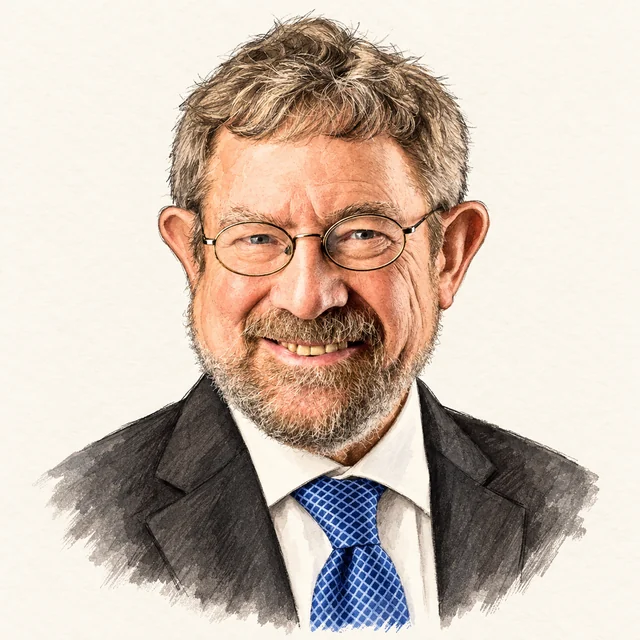
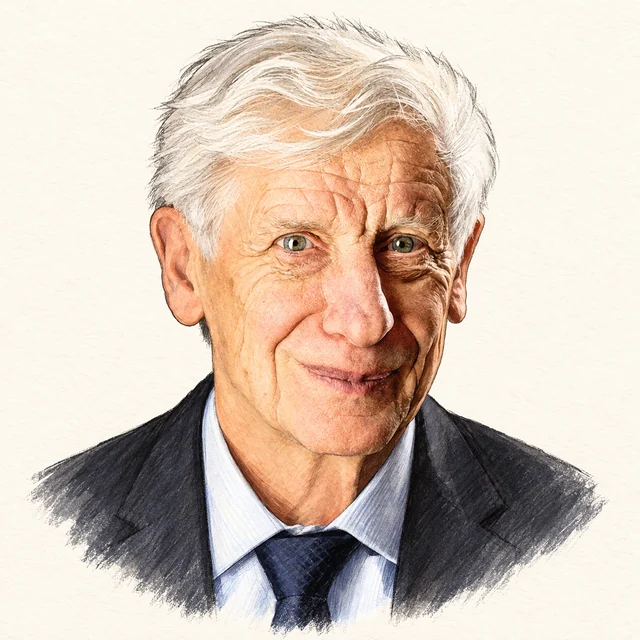
Illustrated portrait of David J. Thouless

David J. Thouless

Prize share · 1/2

With Michael Kosterlitz, he explained a phase transition in thin systems through the separation of paired vortices. In later work with collaborators, he linked the precisely quantised electrical response of the integer quantum Hall effect to a topological quantity.

Read the biography ↗
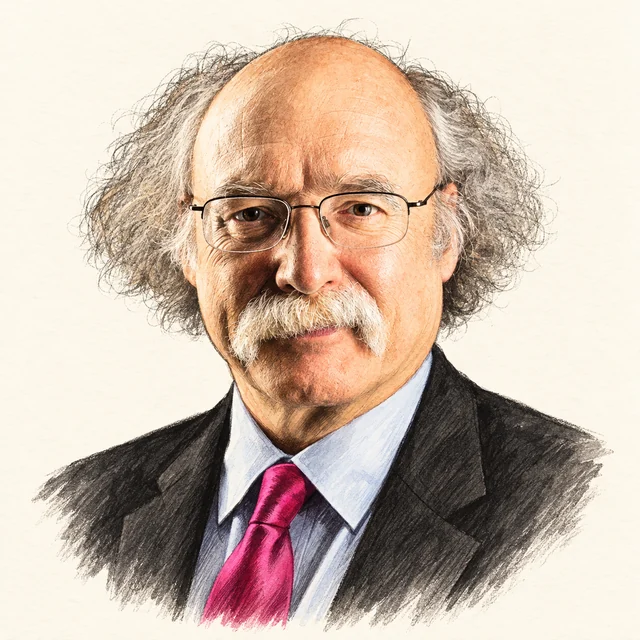
Illustrated portrait of F. Duncan M. Haldane

F. Duncan M. Haldane

Prize share · 1/4

He predicted a fundamental difference between antiferromagnetic quantum chains with integer and half-integer spin. He also devised a model showing how an integer quantum Hall state could arise without a net magnetic flux through the system, expanding the search for topological matter.

Read the biography ↗
Illustrated portrait of J. Michael Kosterlitz

J. Michael Kosterlitz

Prize share · 1/4

He and Thouless showed how vortices of opposite circulation can remain bound in pairs at low temperature and separate at a transition. This explains a change in collective behaviour without the conventional pattern of ordinary long-range order breaking down.

Read the biography ↗

03 · Years in the making

The path here

  1. 1973

    Kosterlitz and Thouless describe vortex-driven transitions in two-dimensional systems.

  2. 1980s

    Thouless and Haldane connect topological ideas to quantum Hall behaviour and magnetic chains.

  3. 2016

    The prize recognises topological phase transitions and phases of matter.

04 · Read further

From the original sources

Original explanations by Curionode, based on the official records below. Biographical details and affiliations refer to the award year.

  1. Official award announcement nobelprize.org
  2. Nobel Committee’s accessible background nobelprize.org