A life in context
The person behind the prize
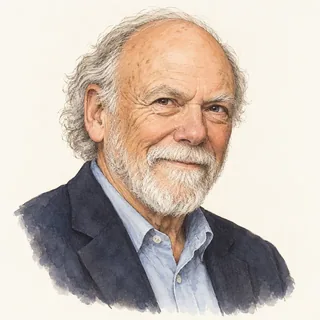
Weiss’s family fled Nazism, and he grew up in the United States. He studied at MIT, receiving his doctorate in 1962, and returned there after work at Tufts and Princeton. His approach to gravitational waves joined an ambitious physical question with painstaking attention to measurement. He worked out how a laser interferometer might detect an extraordinarily small signal while accounting for the many disturbances that could imitate it.
The contribution
He developed the design and noise analysis for laser interferometers capable of measuring gravitational-wave strain. These foundations helped make LIGO possible. The first observation in 2015 depended on decades of development by a large international collaboration, not on one person’s instrument alone.
The idea in plain language
General relativity predicts that changing distributions of mass can send gravitational waves through spacetime. As a wave passes, it changes the relative distances between freely moving objects by an extremely small amount. LIGO uses two long perpendicular arms and laser light to measure this effect. Light travels along both arms and is brought back together. A tiny difference in the paths changes the interference signal, turning a distortion of spacetime into something an instrument can record.
Read the full award story ↗