A life in context
The person behind the prize
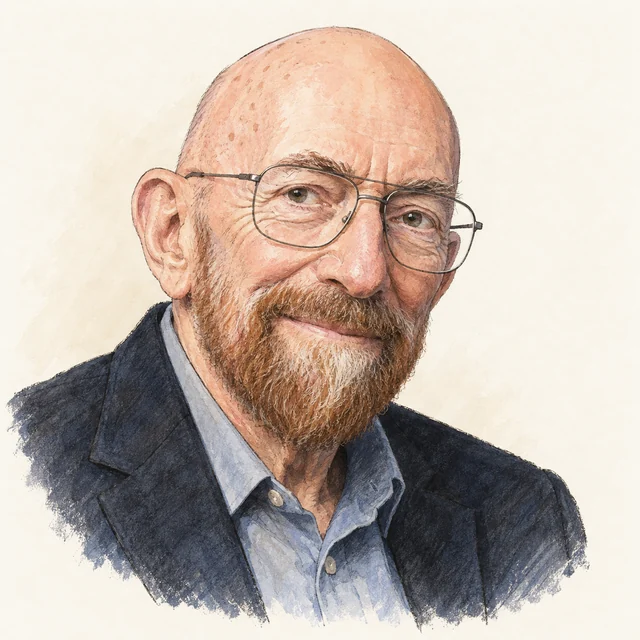
Thorne studied at Caltech and earned his doctorate at Princeton in 1965, returning to Caltech the next year. He investigated what general relativity predicts about objects such as black holes and about the signals they might produce. His theoretical work and long commitment to gravitational-wave astronomy helped connect questions about the universe with the practical challenge of designing a detector on Earth.
The contribution
He made decisive contributions to the theoretical and scientific foundations of LIGO. Understanding possible sources and their waveforms helped researchers recognise and interpret a signal. With Weiss, Barish and the wider collaboration, he helped establish a new way to observe the universe.
The idea in plain language
General relativity predicts that changing distributions of mass can send gravitational waves through spacetime. As a wave passes, it changes the relative distances between freely moving objects by an extremely small amount. LIGO uses two long perpendicular arms and laser light to measure this effect. Light travels along both arms and is brought back together. A tiny difference in the paths changes the interference signal, turning a distortion of spacetime into something an instrument can record.
Read the full award story ↗