A life in context
The person behind the prize
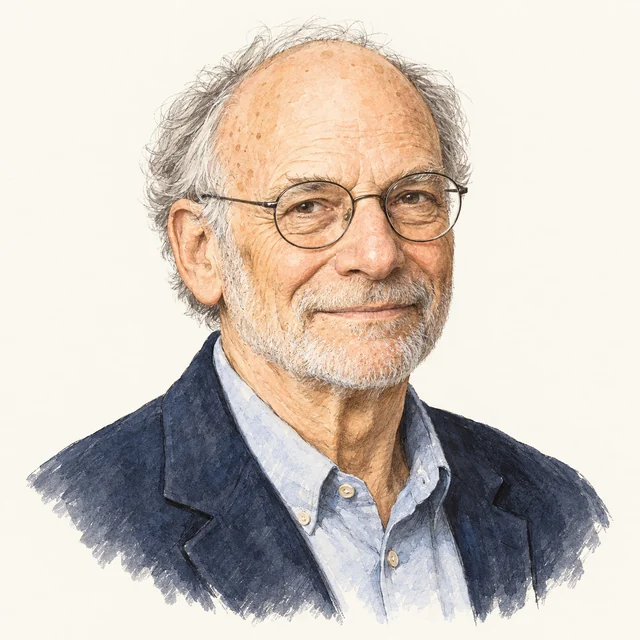
Rosbash grew up in Boston after his parents had fled Nazi Germany. He studied at Caltech and in Paris, received his doctorate at MIT in 1970, and undertook research in Edinburgh. He joined Brandeis in 1974. Working closely with Jeffrey Hall, he brought molecular biology to the study of daily rhythms, helping show that a cell’s clock can be understood through genes, proteins and feedback.
The contribution
He and Hall linked the period gene to rhythmic accumulation of PER protein and to inhibition of further gene activity. This made a self-regulating molecular loop a testable explanation for the fruit fly’s internal clock.
The idea in plain language
Daily rhythms continue even without a fresh sunrise to trigger every cycle. That observation suggested an internal clock, but did not explain its machinery. In 1984, Jeffrey Hall and Michael Rosbash, and independently Michael Young, isolated the fruit-fly period gene. Hall and Rosbash showed that its protein product, PER, changes in abundance over the daily cycle. A key idea followed: the protein could eventually inhibit the activity that produces more of itself.
Read the full award story ↗