c.curionodeThe Nobel Archive

2017 · Physiology or Medicine

How a cell keeps daily time

Fruit-fly experiments revealed a molecular feedback loop that helps generate the rhythm of day and night.

Circadian rhythmsGene–protein feedbackInternal clocks
2017Physiology or Medicine

Visual guide

The prize, pictured

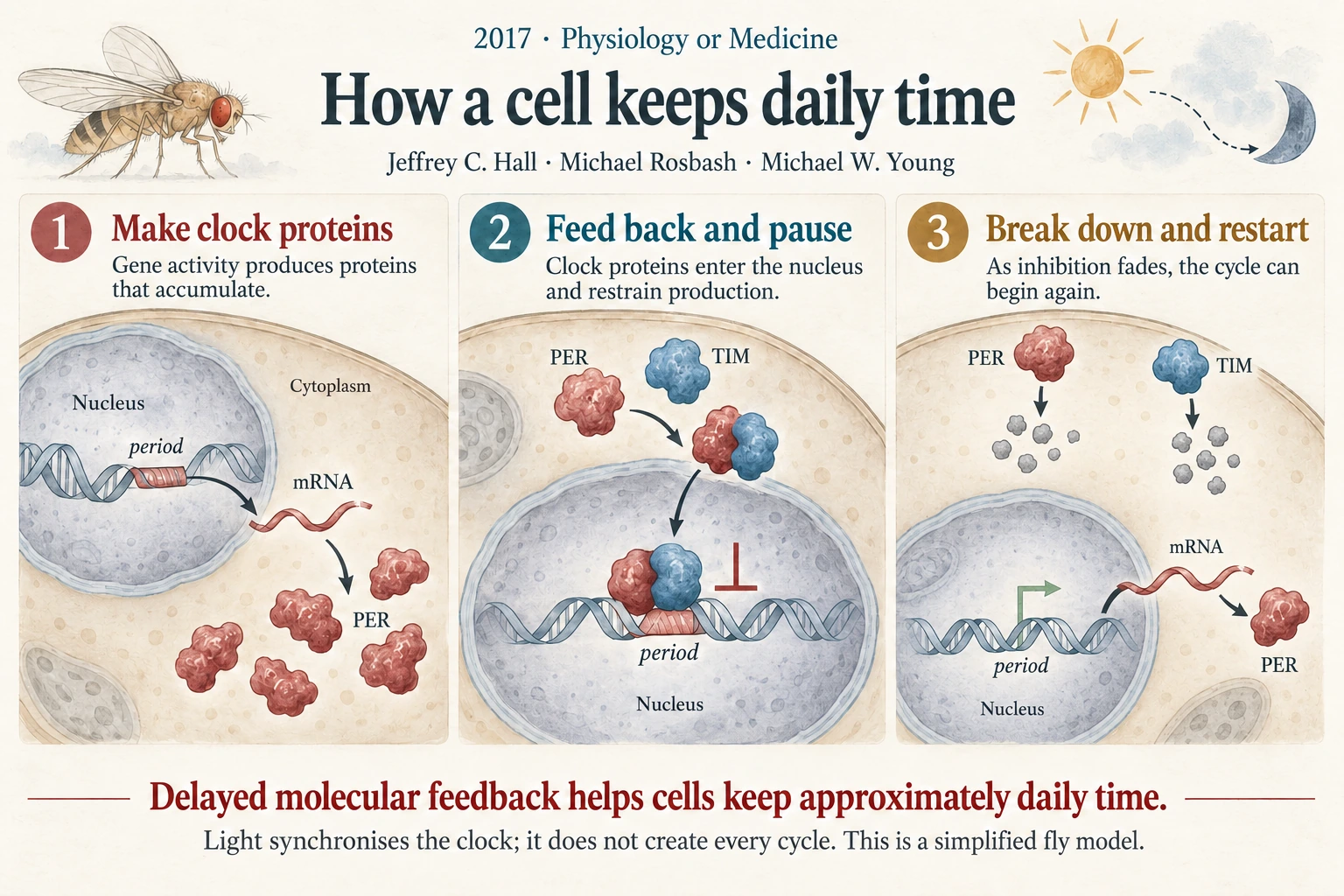
Infographic explaining How a cell keeps daily time
Original AI-generated infographic. A conceptual overview; the explanations and sources below provide context.
Read the poster text

Delayed molecular feedback helps cells keep approximately daily time.

  1. Make clock proteins

    Gene activity produces proteins that accumulate.

  2. Feed back and pause

    Clock proteins enter the nucleus and restrain production.

  3. Break down and restart

    As inhibition fades, the cycle can begin again.

Light synchronises the clock; it does not create every cycle. This is a simplified fly model.

01 · The discovery

The idea, in everyday language

Daily rhythms continue even without a fresh sunrise to trigger every cycle. That observation suggested an internal clock, but did not explain its machinery. In 1984, Jeffrey Hall and Michael Rosbash, and independently Michael Young, isolated the fruit-fly period gene. Hall and Rosbash showed that its protein product, PER, changes in abundance over the daily cycle. A key idea followed: the protein could eventually inhibit the activity that produces more of itself.

The loop needs timing. Protein is made in the cytoplasm, while gene regulation occurs in the nucleus. Young’s work on timeless showed how TIM helps PER enter the nucleus and close the inhibitory loop. His discovery of doubletime identified another regulator, DBT, that affects the delay in PER accumulation. As clock proteins are broken down, inhibition eases and production can resume. Additional components connect this internally generated cycle to environmental cues such as light.

Why it matters

These discoveries established principles for understanding biological time. Circadian systems help coordinate behaviour, metabolism and other functions with the daily environment. They also explain why an internal rhythm can become misaligned with a changed light–dark schedule, as in jet lag. The fruit fly supplied a tractable experimental system, with related principles found in other organisms.
02 · The people

Who brought the idea to life?

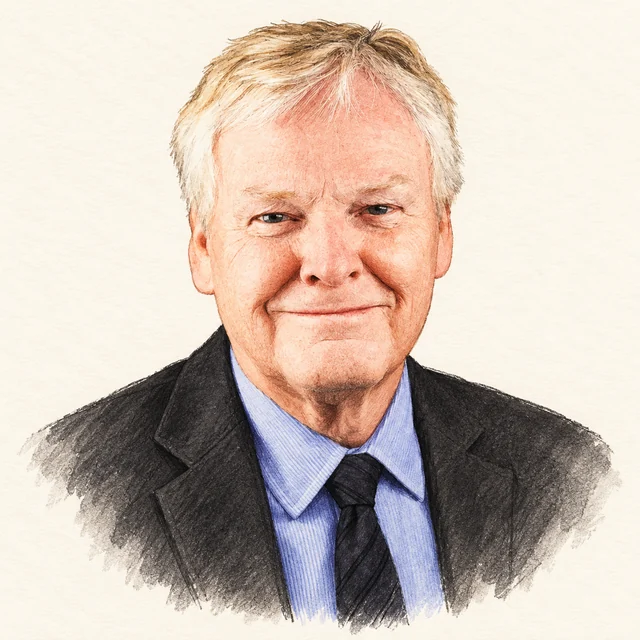
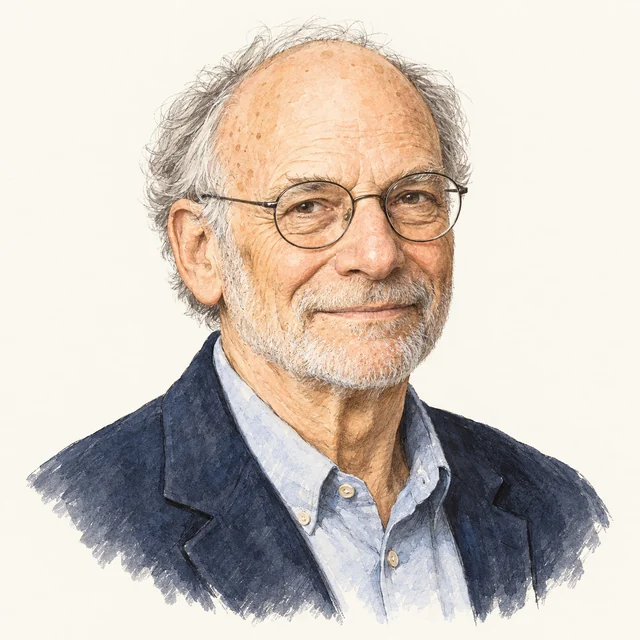
Illustrated portrait of Jeffrey C. Hall

Jeffrey C. Hall

Prize share · 1/3

With Rosbash, he isolated the fruit-fly period gene and investigated the daily changes in its protein product, PER. Their work helped establish a feedback mechanism in which accumulating clock proteins eventually restrain their own production.

Read the biography ↗
Illustrated portrait of Michael Rosbash

Michael Rosbash

Prize share · 1/3

He and Hall linked the period gene to rhythmic accumulation of PER protein and to inhibition of further gene activity. This made a self-regulating molecular loop a testable explanation for the fruit fly’s internal clock.

Read the biography ↗
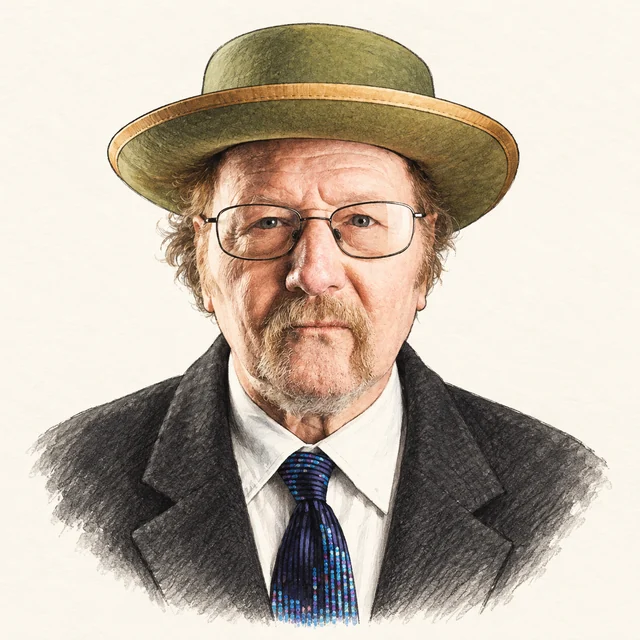
Illustrated portrait of Michael W. Young

Michael W. Young

Prize share · 1/3

He independently isolated period and later identified timeless and doubletime. TIM helps PER enter the cell nucleus, while DBT affects the timing of PER accumulation. These discoveries added crucial steps and delays to the molecular account of the circadian clock.

Read the biography ↗

03 · Years in the making

The path here

  1. 1984

    The period gene is isolated in fruit flies.

  2. 1990–1994

    Feedback and the role of TIM in nuclear entry become clearer.

  3. 1998

    Young’s group identifies doubletime, adding a timing mechanism.

04 · Read further

From the original sources

Original explanations by Curionode, based on the official records below. Biographical details and affiliations refer to the award year.

  1. Official award announcement nobelprize.org
  2. Scientific background nobelprize.org

More in Physiology or Medicine

Browse this subject ↗