01 · The discovery
The idea, in everyday language
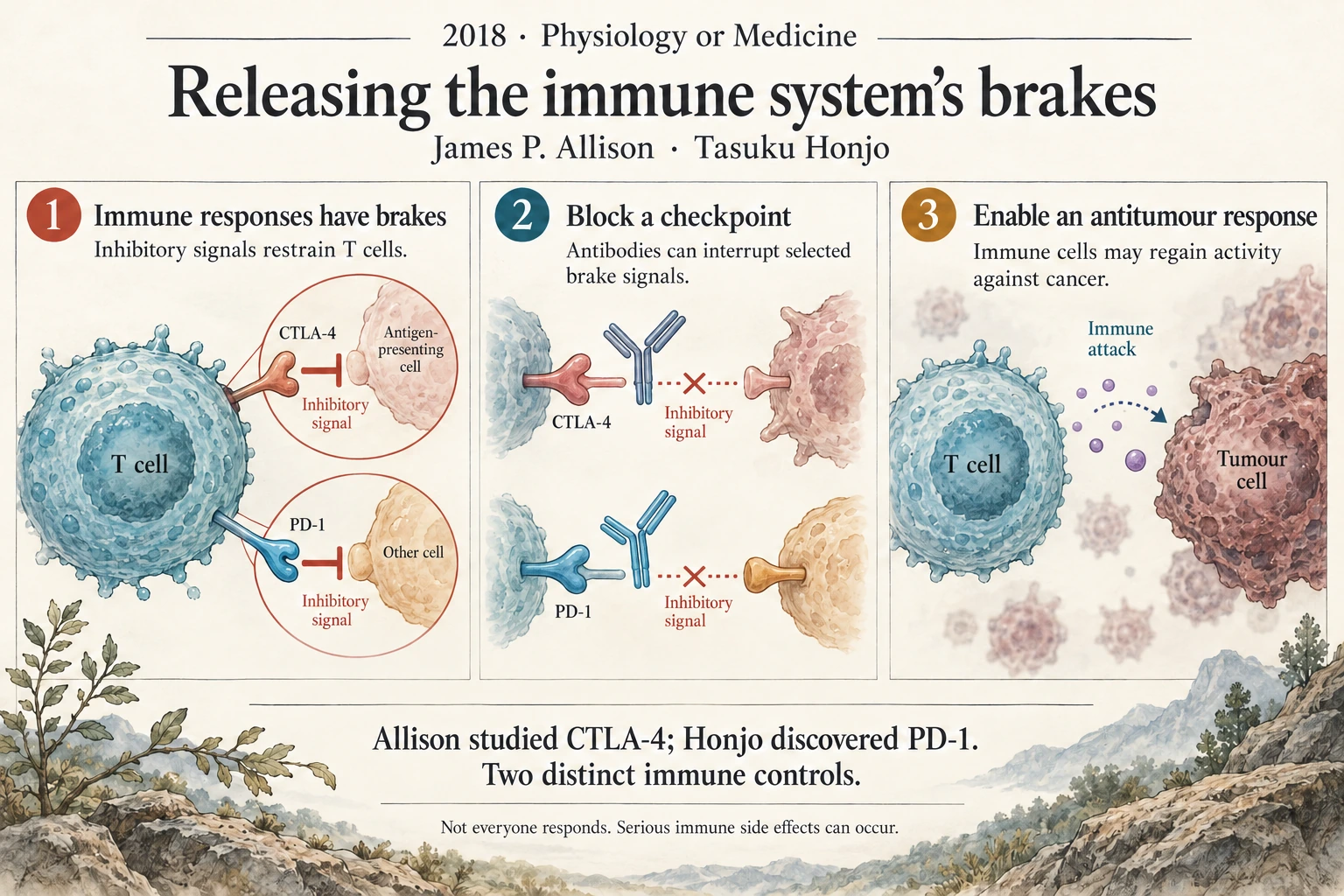
T cells help the immune system recognise and respond to threats. Their activity is controlled by several signals, including inhibitory signals that prevent excessive responses and damage to healthy tissue. A tumour can survive even when immune cells are present, partly because these controls can restrain the response. James Allison studied CTLA-4, one such brake. His experiments showed that blocking it could let an immune response act against tumours, creating a treatment principle based on the body’s own defences.
Tasuku Honjo discovered PD-1 in 1992. Subsequent work established it as another inhibitory control and showed the promise of blocking its pathway in cancer. CTLA-4 and PD-1 are not interchangeable names for the same switch; they act through different mechanisms. Medicines developed from this work use antibodies to interrupt selected inhibitory interactions. The antibodies do not simply poison all cancer cells: they change the conditions under which immune cells can respond.
Why it matters
Clinical results showed that releasing immune brakes could produce lasting responses in some patients, expanding cancer treatment beyond approaches focused directly on destroying or removing tumour cells. The discoveries also made immune regulation a central target for further research, including why responses vary and how different treatments interact.