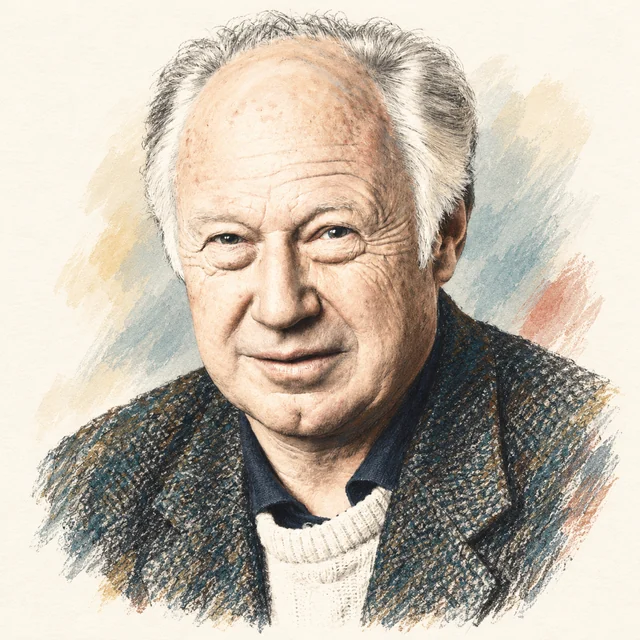
A life in context
The person behind the prize
Smith’s schooling in Blackpool was supported by scholarships and an encouraging chemistry teacher. Organic chemistry at Manchester preceded a move to Vancouver in 1956 to work with Gobind Khorana. Nucleic-acid synthesis became the basis of his later research at British Columbia. Alongside laboratory work, he helped build interdisciplinary biotechnology programmes and collaborations in protein engineering.
The contribution
Smith and colleagues used a synthetic short DNA strand carrying a chosen mismatch to direct a specific sequence change. Their 1978 experiments established a practical route to site-directed mutagenesis, and later protein studies tested what selected amino-acid replacements did. This turned mutation from something researchers merely observed into a controlled experimental question. It did not mean every change improves a protein or that a desired mutation is automatically a therapy.
The idea in plain language
A useful DNA sample can be too scarce to analyse, and a protein’s function can be hard to explain without changing its instructions. The 1993 prize recognised two methods addressing those different problems. Mullis’s PCR uses two short primers to select a DNA region, separates strands with heat, and uses a polymerase to make new strands. Repeated cycles let new products serve as templates for further copies.
Read the full award story ↗