A life in context
The person behind the prize
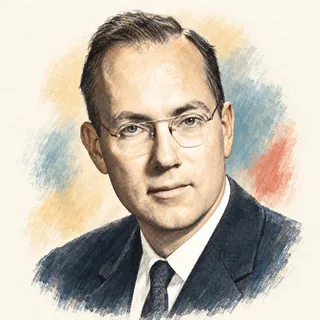
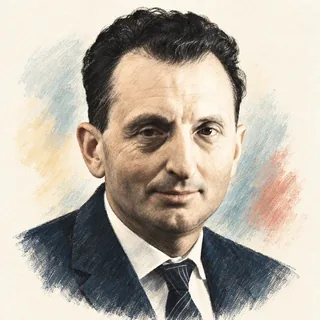
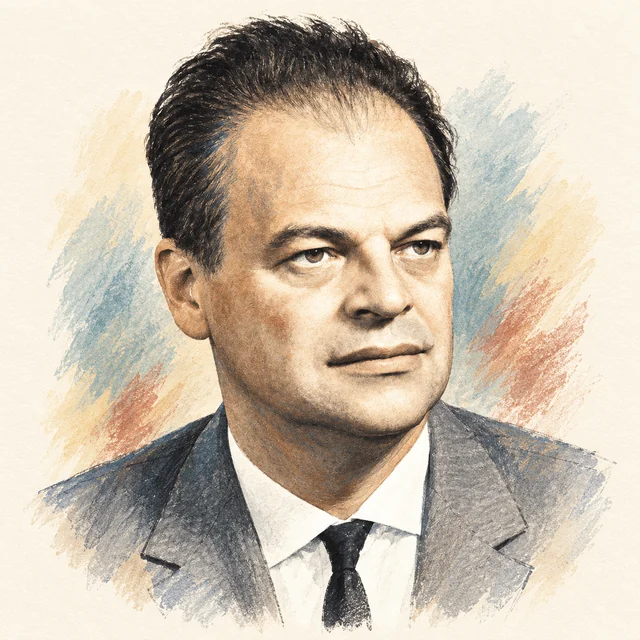
Basov completed secondary school in Voronezh in 1941, then trained as a military medical assistant and served during the war. After demobilisation in 1945 he entered the Moscow Institute of Physical Engineers. He joined the Lebedev Physical Institute in 1950 and pursued postgraduate research under Leontovich and Prokhorov. From 1952 his work with Prokhorov addressed molecular oscillators and the conditions for amplification by stimulated emission. His 1956 doctoral thesis concerned an ammonia-beam molecular oscillator. He and collaborators investigated frequency stability and extended the research toward optical and semiconductor devices. The 1964 affiliation was Lebedev in Moscow. The prize recognised fundamental quantum electronics, with a quarter share for Basov and another quarter for Prokhorov. Later high-power lasers, optoelectronics and institutional appointments were subsequent developments.
The contribution
Basov and Prokhorov developed molecular-oscillator and pumping principles independently of the Columbia team. Basov received one quarter of the Physics Prize.
The idea in plain language
Radiation can stimulate an excited atom or molecule to emit matching radiation. Under ordinary conditions absorption can dominate. Amplification requires suitable preparation, including more particles in the upper than the lower state of the relevant transition: a population inversion.
Read the full award story ↗