01 · The discovery
The idea, in everyday language
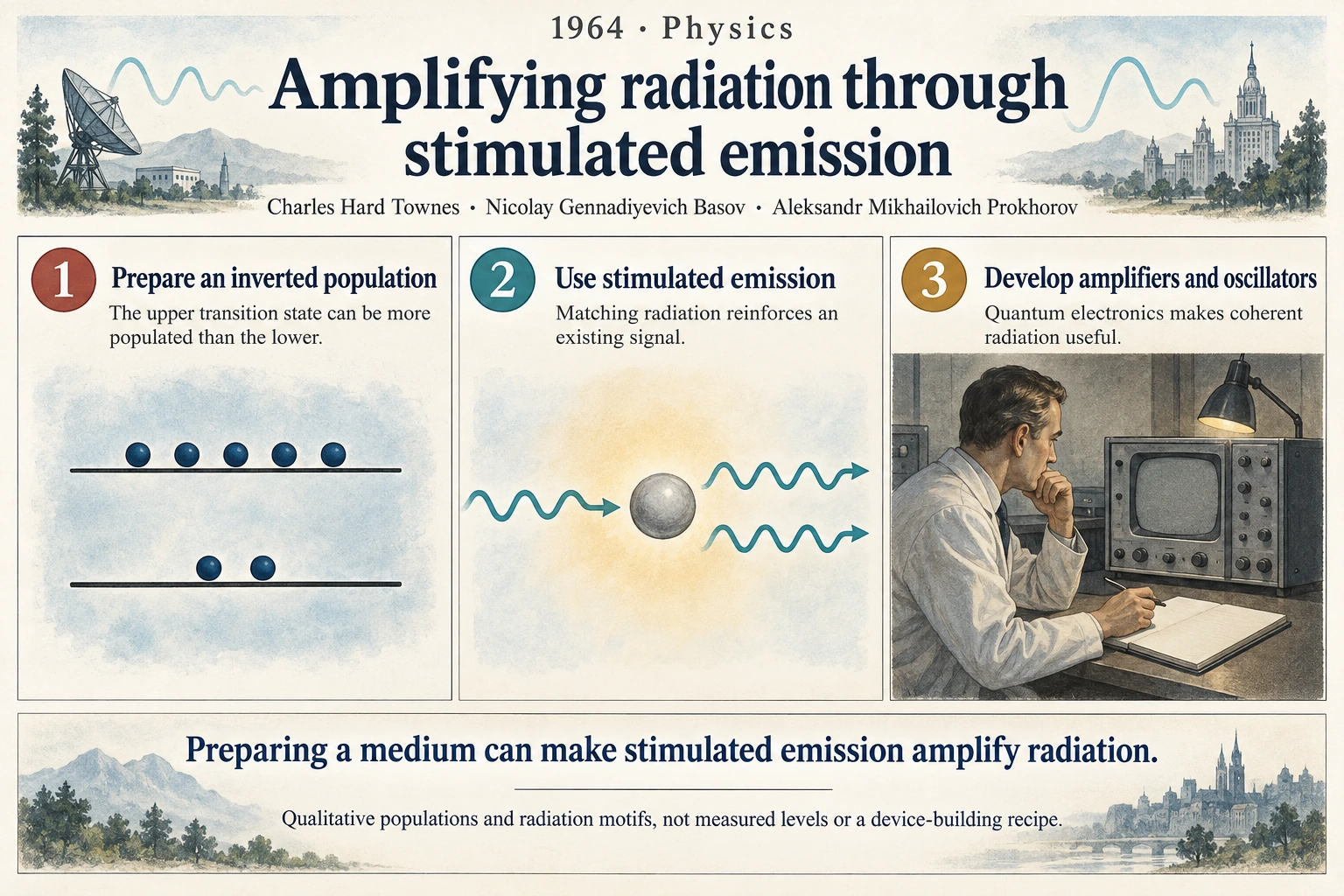
Radiation can stimulate an excited atom or molecule to emit matching radiation. Under ordinary conditions absorption can dominate. Amplification requires suitable preparation, including more particles in the upper than the lower state of the relevant transition: a population inversion.
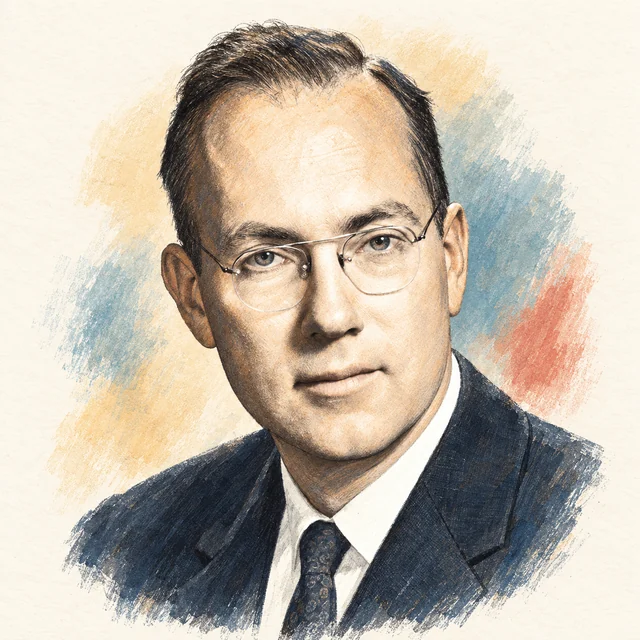
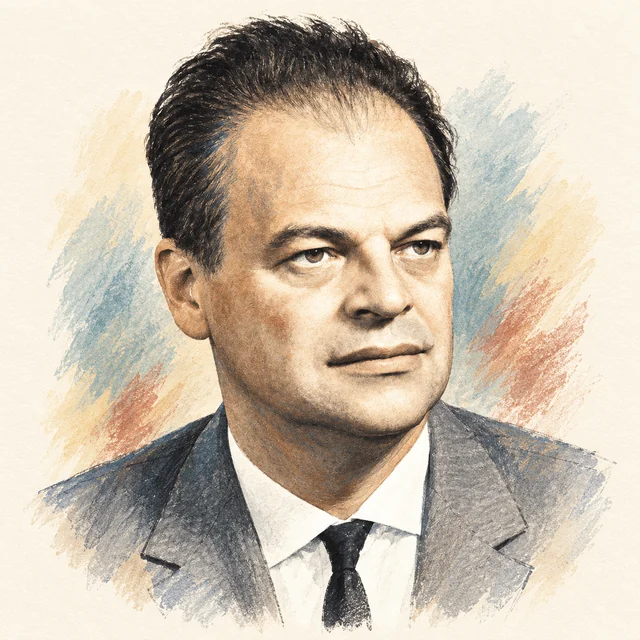
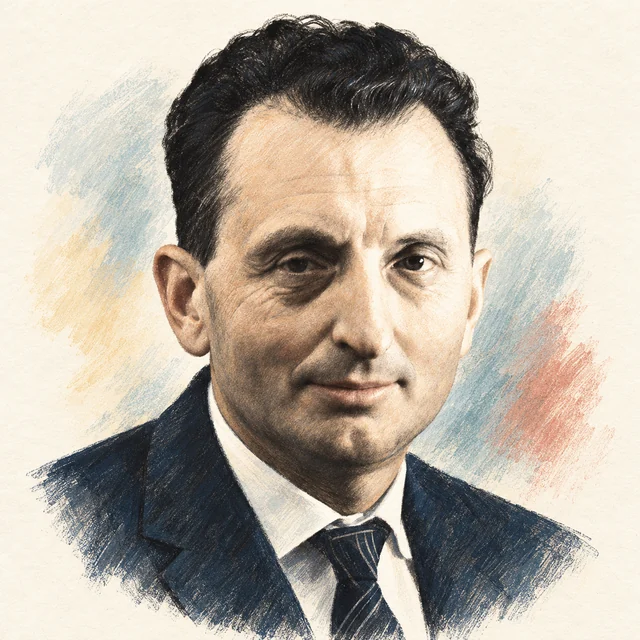
Townes and his Columbia collaborators Gordon and Zeiger made an ammonia maser operate in 1954. Basov and Prokhorov pursued molecular oscillators independently at Lebedev and developed pumping ideas. Optical proposals, including Townes and Schawlow’s 1958 work and Prokhorov’s resonator ideas, extended the principle toward lasers. Maiman demonstrated the first working laser in 1960.
Why it matters
Masers provided sensitive microwave amplification, important in radio astronomy and communications. Lasers opened new ways to study and use coherent light. Townes received one half, while Basov and Prokhorov each received one quarter. Many collaborators contributed to later instruments and applications.