A life in context
The person behind the prize
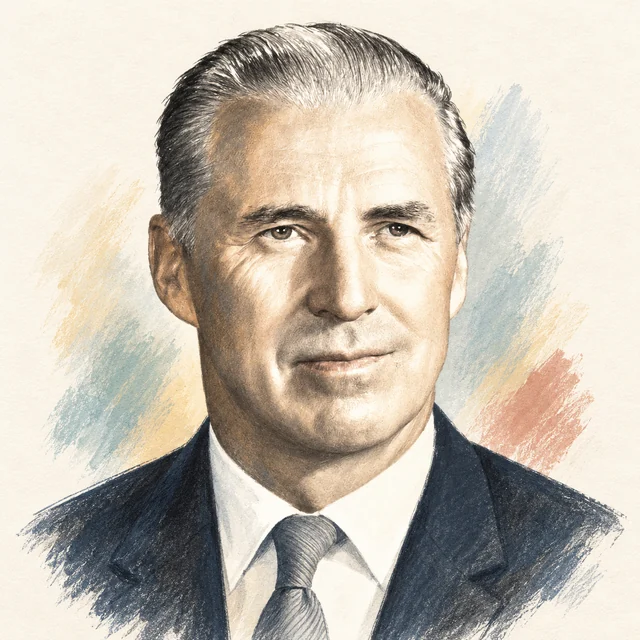
Borlaug grew up on an Iowa farm and studied forestry at Minnesota, graduating in 1937. Plant-pathology studies brought a master’s degree in 1939 and doctorate in 1942. After industrial microbiology work, he joined the Mexican government–Rockefeller cooperative programme in 1944. With Mexican colleagues, he developed and tested wheat varieties combining high yield, shorter straw and disease resistance. Training and collaboration helped adapt varieties and farming practices for other environments, notably in India and Pakistan. CIMMYT’s official establishment in 1966 was distinct from the earlier programme. As leader of its wheat improvement work, Borlaug connected research with practical adoption. The Peace Prize recognised the hope created by increased food production. His biography presents that achievement as breathing space for further social and economic work, rather than an end to hunger. Farmers, scientists, institutions and access to suitable inputs all mattered to its results.
The contribution
Borlaug’s wheat improvement and work to apply it helped create the hope associated with the Green Revolution. He received the entire Peace Prize.
The idea in plain language
Working with colleagues in Mexico, Borlaug pursued wheat with higher yields, disease resistance and shorter stems that could better withstand lodging. Crossing, selection and testing were connected with farming practices and the conditions under which varieties could perform.
Read the full award story ↗

