c.curionodeThe Nobel Archive

1970 · Peace

Wheat improvement that created room for hope

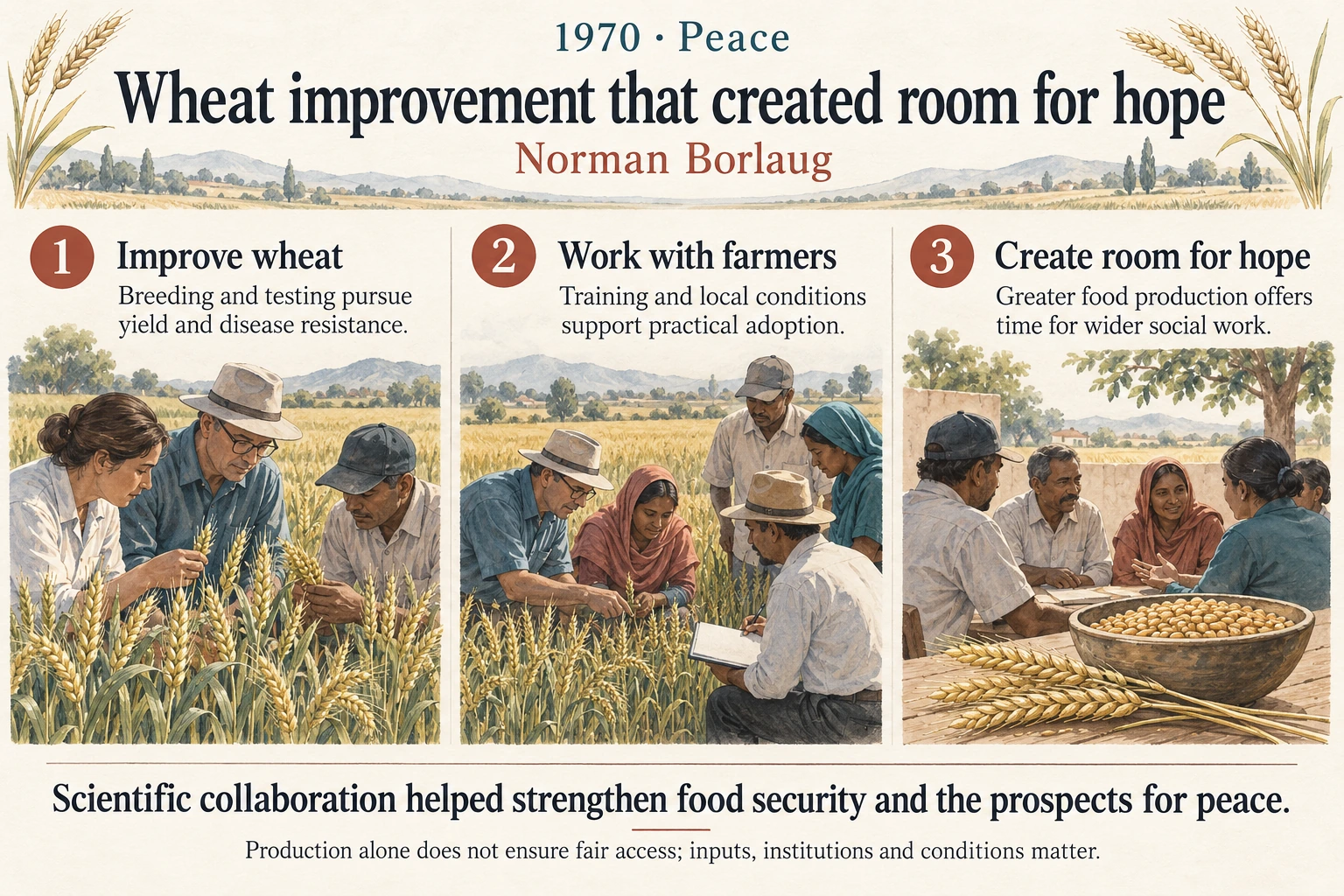
Borlaug combined wheat breeding, field research and practical collaboration to help increase food production. The Peace Prize recognised the hope associated with the Green Revolution.

Green RevolutionWheat improvementFood security
1970Peace

Visual guide

The prize, pictured

Infographic explaining Wheat improvement that created room for hope
Original AI-generated infographic. A conceptual overview; the explanations and sources below provide context.
Read the poster text

Scientific collaboration helped strengthen food security and the prospects for peace.

  1. Improve wheat

    Breeding and testing pursue yield and disease resistance.

  2. Work with farmers

    Training and local conditions support practical adoption.

  3. Create room for hope

    Greater food production offers time for wider social work.

Production alone does not ensure fair access; inputs, institutions and conditions matter.

01 · The contribution

The idea, in everyday language

Working with colleagues in Mexico, Borlaug pursued wheat with higher yields, disease resistance and shorter stems that could better withstand lodging. Crossing, selection and testing were connected with farming practices and the conditions under which varieties could perform.

Training and international collaboration helped adapt and introduce improved wheat in India, Pakistan and elsewhere. This was more than delivering a seed: agronomy, suitable inputs, institutions and farmer adoption mattered. The earlier Mexican programme began before CIMMYT’s formal establishment in 1966.

Why it matters

Higher production helped countries facing serious food pressures and offered time for broader social and economic work. The committee connected food security with the prospects for peace, recognising hope rather than announcing that hunger or conflict had ended.
02 · The people

Who brought the idea to life?

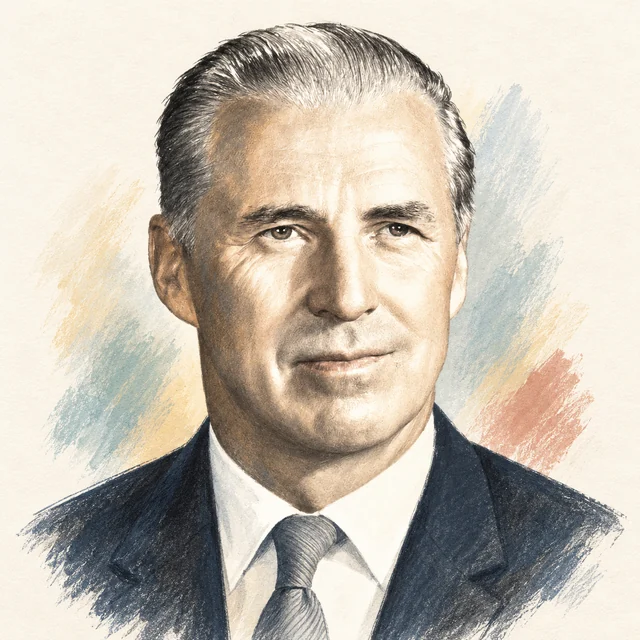
Illustrated portrait of Norman Borlaug

Norman Borlaug

Prize share · 1

Borlaug’s wheat improvement and work to apply it helped create the hope associated with the Green Revolution. He received the entire Peace Prize.

Read the biography ↗

03 · Years in the making

The path here

  1. 1937

    Borlaug graduates in forestry.

  2. 1942

    He completes his plant-pathology doctorate.

  3. 1944

    He joins the cooperative Mexican wheat programme.

  4. 1956

    Nobel sources report Mexican wheat self-sufficiency.

  5. 1966

    CIMMYT is formally established.

  6. 1970

    He receives the Peace Prize.

04 · Read further

From the original sources

Original explanations by Curionode, based on the official records below. Biographical details and affiliations refer to the award year.

  1. Official award summary nobelprize.org
  2. Award ceremony speech nobelprize.org
  3. CIMMYT institutional history cimmyt.org
  4. Official biography: Norman Borlaug nobelprize.org