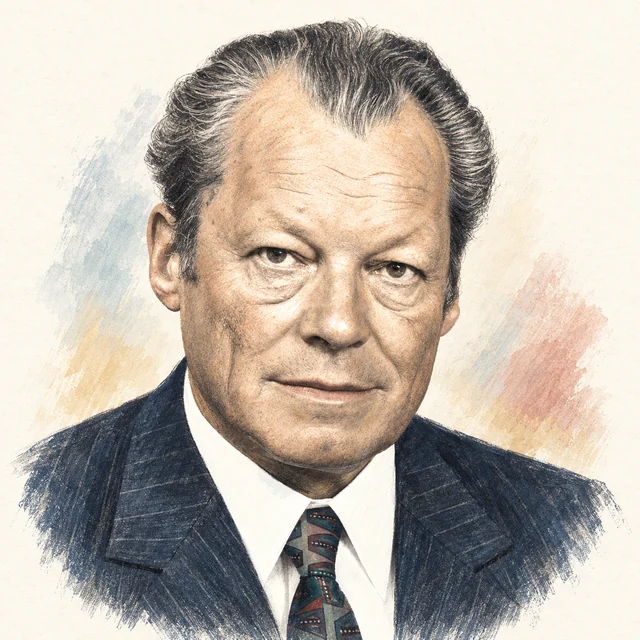
A life in context
The person behind the prize
Brandt opposed Nazism as a young German activist and escaped to Norway in 1933. He worked as a journalist and helped persecuted people. The occupation of Norway led him to Sweden, where he continued writing for a free Norway and democratic Germany. Returning to postwar Germany, he became active in the Social Democratic Party. He was mayor of West Berlin from 1957 to 1966, foreign minister and vice-chancellor from 1966 to 1969, and federal chancellor from 1969. His government sought dialogue with the Soviet Union and Poland while maintaining Western cooperation. Agreements signed in Moscow and Warsaw in 1970 renounced force and addressed borders; the 1971 Four Power Agreement offered a framework for easing Berlin’s tensions. His kneeling at the Warsaw ghetto memorial expressed reconciliation with victims of Nazi persecution. The Nobel Committee recognised practical steps toward East–West dialogue. It did not claim that German division or the Cold War had ended. Brandt’s later international development work followed the award.
The contribution
Brandt pursued concrete diplomatic steps toward meaningful East–West dialogue and reconciliation. He received the entire Peace Prize.
The idea in plain language
As West German foreign minister and then chancellor, Brandt sought détente while maintaining Western cooperation. His government signed the nuclear Non-Proliferation Treaty in 1969. The Moscow agreement of August 1970 renounced force; the Warsaw agreement of December 1970 recognised Poland’s western border and renounced territorial claims.
Read the full award story ↗

