A life in context
The person behind the prize
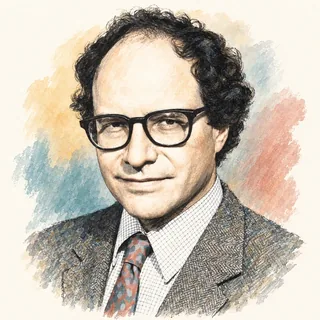
Berg grew up in Brooklyn, where a school science-club organizer encouraged students to answer questions through experiments. Navy service interrupted his studies; he returned to Penn State and graduated in biochemistry in 1948. His doctoral research at Western Reserve examined one-carbon metabolism, followed by work with Herman Kalckar in Copenhagen and Arthur Kornberg in St Louis. He helped establish Stanford’s biochemistry department in 1959. Studies of tumour viruses and mammalian cells, including a period with Renato Dulbecco, led him to methods for joining DNA molecules outside a cell. In 1972 his group constructed recombinant DNA combining viral and bacterial genetic material. The work opened a method for investigating genes rather than simply describing their composition.
The contribution
Berg developed fundamental biochemical methods for constructing recombinant DNA and studying nucleic acids. He received one half of the Chemistry Prize. Gilbert and Sanger shared the other half for determining base sequences, a distinct task from joining DNA pieces.
The idea in plain language
Knowing that DNA contains four kinds of base is different from knowing their order, and different again from joining chosen DNA molecules. Berg’s biochemical work made such joining possible in a test tube. His group’s 1972 recombinant-DNA construction combined material from viral and bacterial sources, opening an experimental route to studying gene structure and function.
Read the full award story ↗