A life in context
The person behind the prize
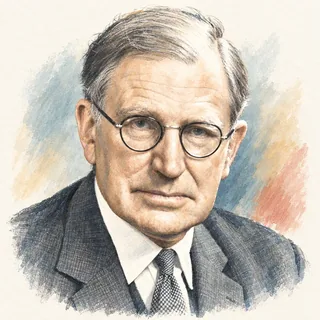
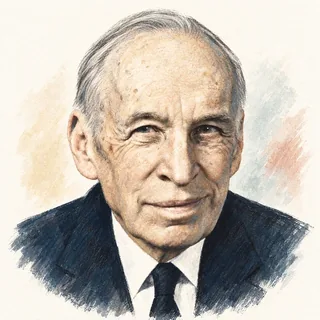
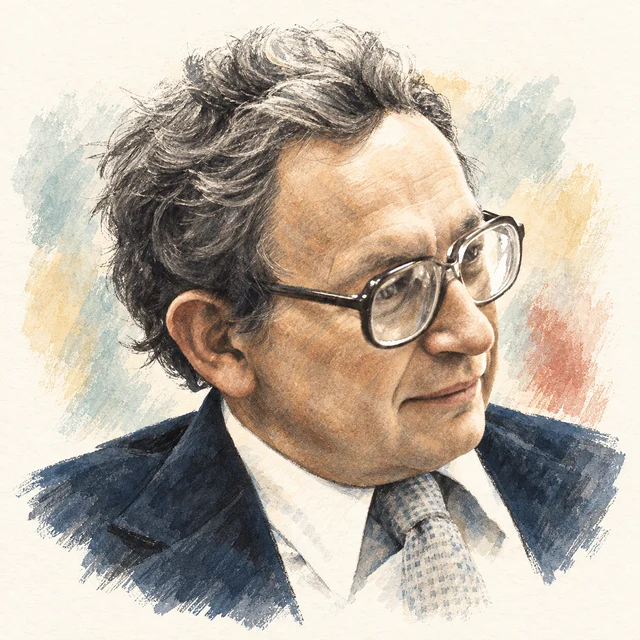
Anderson grew up in Urbana in a family of academics and studied physics at Harvard. Wartime antenna research was followed by graduate work with John Van Vleck, completed in 1949. At Bell Laboratories he learned to connect theoretical questions closely with experiments on magnetism and solids. His 1958 localisation work explained how disorder can prevent electronic waves from spreading through a material. Visits and a later appointment at Cambridge encouraged exchanges with Nevill Mott and younger researchers. From 1975 he combined Bell work with a half-time Princeton appointment. His wider research covered magnetic interactions and collective quantum behaviour. The 1977 award recognised foundational electronic-structure theory, not a claim that every prediction in his later work had been established.
The contribution
Anderson explained localisation caused by disorder and developed theories of magnetic and interacting electronic systems. He received one third of the Physics Prize alongside Mott and Van Vleck; their contributions address related problems rather than one joint experiment.
The idea in plain language
Van Vleck used quantum mechanics to explain magnetic response and how the electric surroundings within a crystal alter atomic electronic states. Those local environments affect the magnetic moments and energy levels available to electrons. His work helped make magnetism a quantitative subject rather than a collection of unrelated material properties.
Read the full award story ↗